
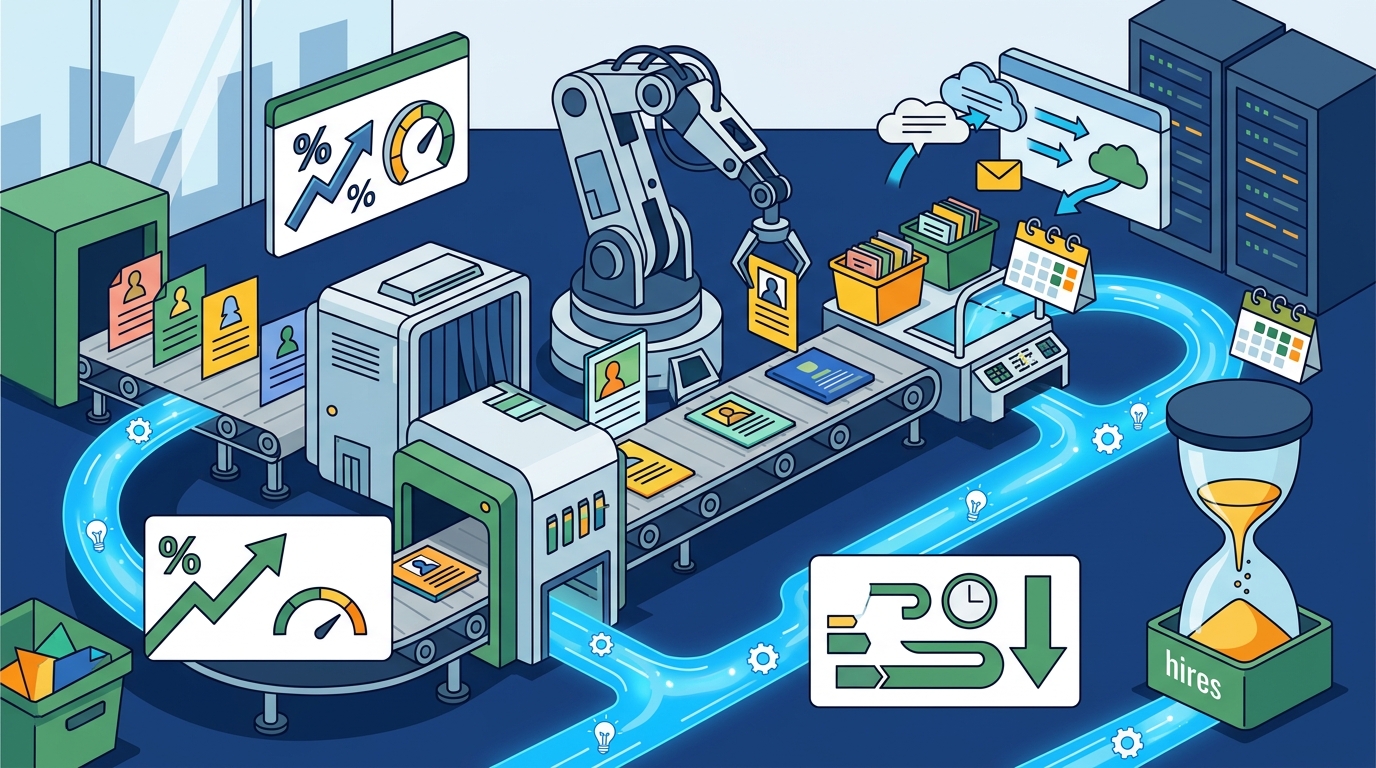
The recruitment landscape is undergoing a seismic shift driven by artificial intelligence. According to recent industry data, organizations that effectively integrate AI into their hiring processes report a 40% reduction in time-to-hire metrics compared to traditional manual methods. This statistic highlights not just a trend, but a fundamental operational imperative for modern talent acquisition teams. As the volume of applications continues to outpace recruiter capacity, the ability to leverage automated systems for screening, scheduling, and candidate engagement has become a critical differentiator. However, successful implementation requires more than just purchasing software; it demands a strategic approach to workflow integration, data governance, and human oversight. This guide outlines the essential best practices for deploying AI in recruiting workflows to maximize efficiency while maintaining the human touch that defines great hiring.
Defining AI in Modern Recruiting
Before diving into implementation, it is crucial to understand the scope of AI in this context. Applicant Tracking Systems (ATS) is a software application designed to manage the recruiting process. Modern iterations of these systems utilize machine learning algorithms to parse resumes, rank candidates, and predict job fit. Machine learning is a subset of artificial intelligence that enables systems to learn and improve from experience without being explicitly programmed. In recruiting, this allows platforms to identify patterns in successful hires and apply those patterns to new applicants.
Another critical component is Natural Language Processing (NLP) is a branch of AI that gives computers the ability to understand, interpret, and generate human language. NLP powers chatbots that engage candidates 24/7 and tools that analyze the tone and sentiment of interview responses. Understanding these definitions helps recruiters distinguish between simple automation and true AI-driven insights. For a deeper look at the specific types of AI applications available, explore our types of AI recruiting solutions to see how they map to your specific organizational needs.
Strategic Integration of AI Tools
Implementing AI is not a one-size-fits-all endeavor. The first best practice is to audit your current workflow to identify bottlenecks. Are you spending too much time on resume screening? Is candidate drop-off high during the scheduling phase? Once you identify these pain points, you can select AI tools that address them directly. For instance, if scheduling is a bottleneck, AI-driven calendar assistants can automate the back-and-forth emails that plague recruiters.
Integration must be seamless. AI tools should not exist in silos but should integrate with your existing HRIS and ATS. Match2 provides features designed to connect candidate data across multiple touchpoints, ensuring that AI insights are contextualized within the broader candidate profile. When evaluating vendors, prioritize platforms that offer open APIs and robust data export capabilities. This ensures that you retain ownership of your data and can switch tools if your needs evolve. Visit our assess page to evaluate how your current tech stack aligns with AI-ready infrastructure.
Data Governance and Bias Mitigation
One of the most significant risks in AI recruiting is algorithmic bias. If historical hiring data contains biases, the AI will learn and replicate them. Therefore, rigorous data governance is non-negotiable. Start by cleaning your historical data. Remove demographic information that is irrelevant to job performance and ensure your training data represents a diverse range of successful employees. Regularly audit your AI tools for disparate impact. Use tools that provide transparency into how decisions are made, allowing you to verify that the AI is evaluating skills and competencies rather than proxy variables for protected classes.
Transparency with candidates is also part of data governance. Inform candidates when AI is being used in their evaluation process. This builds trust and aligns with emerging regulatory frameworks in the EU and several US states. For more information on compliance and ethical standards, review our faq section which addresses common concerns about data privacy and algorithmic fairness.
Enhancing Candidate Experience
AI should enhance, not hinder, the candidate experience. A common mistake is allowing automation to become impersonal. Use AI to handle repetitive tasks, freeing up recruiters to have meaningful conversations. For example, AI chatbots can answer FAQs about the company culture or benefits instantly, providing a positive first impression. However, when a candidate moves to the interview stage, ensure they are connected with a human recruiter promptly.
Personalization at scale is another key benefit. AI can analyze a candidate's profile and tailor communication to their specific interests and background. This level of personalization was previously impossible to achieve manually. By leveraging insights from our latest blog posts, you can learn how to craft AI-driven messages that resonate with top talent. Remember, the goal is to make candidates feel valued and understood, even in a high-volume hiring environment.
The Human-in-the-Loop Model
Despite the power of AI, the human element remains irreplaceable in recruiting. The best practice is to adopt a "human-in-the-loop" approach. This means that AI provides recommendations and insights, but final decisions are made by humans. Recruiters should use AI as a co-pilot, not an autopilot. For example, AI might rank the top 10 candidates, but the recruiter must review the nuances of each profile, conduct interviews, and assess cultural fit.
This model also applies to decision-making. If an AI tool rejects a candidate, a human should have the ability to review that decision. This safety net prevents erroneous rejections and ensures that exceptional candidates are not overlooked due to algorithmic errors. Our about page details our philosophy on balancing technology with human expertise to create better hiring outcomes.
Measuring Success and ROI
To justify the investment in AI, you must measure its impact. Key metrics include time-to-hire, cost-per-hire, quality-of-hire, and candidate satisfaction scores. Track these metrics before and after implementation to quantify the improvement. Additionally, monitor the accuracy of AI predictions. Are the candidates recommended by the AI actually performing well in their roles? This long-term data is crucial for refining your AI models and ensuring they remain effective over time.
| Metric | Definition | Target Improvement | Measurement Tool |
|---|---|---|---|
| Time-to-Hire | Days from application to offer acceptance | 20-30% reduction | ATS Analytics |
| Quality-of-Hire | Performance ratings at 6 and 12 months | 10-15% increase | HRIS Performance Module |
| Candidate Satisfaction | Post-interview survey scores | 5+ point increase | Pulse Surveys |
| AI Accuracy | Percentage of AI-recommended hires retained | >80% retention rate | Recruiting Dashboard |
Key Takeaways
- Audit First: Identify specific workflow bottlenecks before selecting AI tools to ensure targeted impact.
- Mitigate Bias: Regularly audit algorithms for disparate impact and clean historical data to prevent bias replication.
- Human Oversight: Maintain a human-in-the-loop model for all final hiring decisions to ensure nuance and fairness.
- Transparency: Inform candidates when AI is used in their evaluation to build trust and comply with regulations.
- Measure ROI: Track time-to-hire, quality-of-hire, and candidate satisfaction to quantify the value of AI implementation.
- Seamless Integration: Ensure AI tools integrate with existing HRIS and ATS systems to avoid data silos.
- Continuous Learning: Use long-term performance data to refine AI models and improve prediction accuracy over time.
Frequently Asked Questions
How does AI reduce bias in recruiting?
AI can reduce bias by focusing on skills and competencies rather than demographic proxies. However, this requires careful data cleaning and regular auditing to ensure the algorithm does not learn historical biases. Transparency and human oversight are critical to maintaining fairness.
What is the role of natural language processing in hiring?
Natural language processing enables AI to understand and generate human language. In hiring, it powers chatbots for candidate engagement, analyzes resume content for relevant keywords, and assesses the tone of interview responses to gauge cultural fit.
Can AI replace human recruiters?
No, AI is designed to augment human recruiters, not replace them. It handles repetitive tasks like screening and scheduling, allowing recruiters to focus on relationship building, complex decision-making, and candidate experience.
How do I measure the ROI of AI in recruiting?
Track metrics such as time-to-hire, cost-per-hire, quality-of-hire, and candidate satisfaction. Compare these metrics before and after implementation to quantify the improvement and justify the investment.
What are the data privacy concerns with AI recruiting?
Data privacy concerns include the secure storage of candidate information, compliance with regulations like GDPR and CCPA, and ensuring that AI does not inadvertently expose sensitive data. Robust data governance and vendor due diligence are essential.
How important is candidate communication in AI-driven recruiting?
Candidate communication is vital. AI should be used to provide timely and personalized updates, but it should not replace human interaction entirely. Candidates appreciate knowing their application is being processed and receiving clear feedback.
What is the best way to start implementing AI in recruiting?
Start by assessing your current tech stack and identifying specific pain points. Choose a pilot project, such as AI-driven resume screening or chatbot engagement, and measure its impact before scaling to other areas of the workflow.
Next Steps
Implementing AI in your recruiting workflow is a strategic journey that requires careful planning, execution, and continuous optimization. By following these best practices, you can harness the power of AI to attract, screen, and hire top talent more efficiently. To see how Match2 can help you achieve these goals, contact our team today to schedule a demo and explore our connected candidate solutions.