
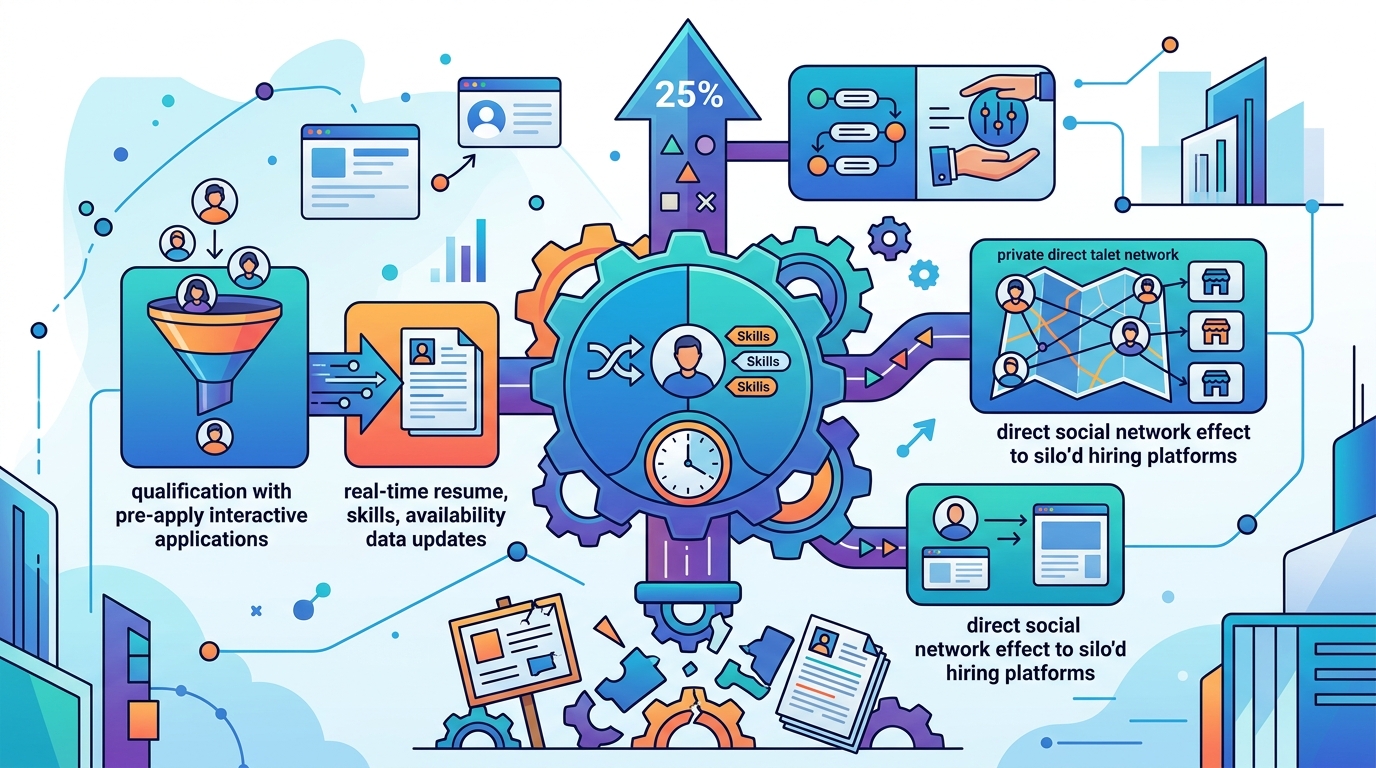
Modern talent acquisition has shifted from reactive hiring to proactive talent management. According to recent industry data, organizations that integrate comprehensive recruiting solutions see a 25% increase in hiring efficiency compared to those relying on disjointed tools. This statistic highlights the critical need for unified platforms that streamline the entire employee lifecycle. As the workforce becomes more dynamic, the software you choose must do more than just post jobs. It must actively manage candidate relationships, automate administrative burdens, and provide data-driven insights to guide strategic hiring decisions. (Amid Hiring Challenges)
Applicant Tracking System (ATS) Core
The foundation of any robust recruiting solution is the Applicant Tracking System. This module serves as the central repository for all candidate data, job requisitions, and hiring workflows. Without a centralized ATS, hiring teams risk losing critical information in email inboxes and spreadsheets. An Applicant Tracking System is a software application that enables employers to manage the recruitment process from job posting to onboarding.
Effective ATS platforms offer customizable workflows that adapt to your specific hiring stages. Whether you are hiring for a single role or scaling a large team, the system must handle high volumes of applications without performance degradation. Key components include resume parsing, which automatically extracts relevant data from uploaded documents, and automated status updates that keep candidates informed at every step. This automation reduces manual entry errors and allows recruiters to focus on high-value interactions.
For organizations looking to understand the breadth of these capabilities, exploring detailed feature overviews can provide clarity on how different modules interact. A well-configured ATS ensures that no candidate falls through the cracks, maintaining a consistent and professional brand image throughout the application process.
Candidate Experience and Engagement
In today's competitive job market, the candidate experience is a direct reflection of your company culture. Top talent expects a seamless, transparent, and responsive hiring process. Recruiting solutions must prioritize user-friendly interfaces for both applicants and hiring managers. When candidates encounter confusing application forms or lack of communication, they often withdraw their interest, leading to higher drop-off rates.
Modern platforms integrate communication tools that facilitate personalized outreach. This includes automated email sequences, interview scheduling links, and feedback collection mechanisms. By reducing friction in the application process, companies can attract a wider pool of qualified applicants. Furthermore, mobile optimization is no longer optional. Data shows that a significant percentage of job seekers apply via mobile devices, so your recruiting solution must render perfectly on smaller screens.
Engagement does not end with the application. Effective talent management involves nurturing relationships with passive candidates who may not be ready to apply but could be valuable in the future. Building a talent pipeline within your recruiting solution allows you to stay connected with these individuals over time, turning them into active applicants when the right role opens up.
Assessment and Screening Capabilities
Screening candidates manually is time-consuming and prone to bias. Advanced recruiting solutions integrate assessment tools that evaluate skills, cognitive abilities, and cultural fit objectively. These tools help hiring teams identify the most qualified candidates quickly, reducing the time-to-hire metric significantly. Skills assessment is the process of evaluating a candidate's technical and soft skills against predefined job requirements.
Match2, for instance, emphasizes connected candidate solutions that streamline this exact process. By leveraging intelligent screening, recruiters can prioritize candidates who meet specific criteria without sifting through hundreds of unqualified resumes. This approach not only speeds up the hiring process but also improves the quality of hire by focusing on measurable competencies.
When evaluating a recruiting platform, look for built-in assessment libraries or integrations with third-party testing providers. The ability to customize assessments for specific roles ensures that you are testing for the right skills. Additionally, consider the ease of sharing assessment results with hiring managers. A unified dashboard that displays assessment scores alongside resume data provides a holistic view of each candidate's potential.
For more insights on how assessment tools impact hiring quality, you can read more on assessment strategies. These tools are essential for maintaining a fair and efficient hiring process.
Integration and Ecosystem Connectivity
No recruiting solution exists in a vacuum. It must integrate seamlessly with your existing tech stack, including HRIS, CRM, and background check providers. Integration capabilities are a critical feature for any modern talent management platform. Without these connections, data silos form, leading to inefficiencies and potential data integrity issues.
Key integrations include job board aggregators that allow you to post to multiple platforms from a single interface. This expands your reach without requiring manual duplication of efforts. Additionally, calendar integrations with tools like Outlook or Google Calendar simplify interview scheduling, reducing the back-and-forth emails that often delay the process.
API accessibility is another vital aspect. If your organization has unique workflows or proprietary tools, an open API allows for custom integrations that fit your specific needs. This flexibility ensures that the recruiting solution grows with your business rather than constraining it. Exploring the types of recruiting solutions available can help you identify which integration capabilities are most relevant to your infrastructure.
Analytics and Reporting
Data-driven decision-making is the hallmark of effective talent management. Recruiting solutions must provide robust analytics dashboards that track key performance indicators (KPIs). These metrics include time-to-fill, cost-per-hire, source of hire, and candidate conversion rates. Without accurate data, it is impossible to optimize your hiring strategy or justify recruitment budgets.
Advanced reporting features allow you to drill down into specific data points. For example, you can analyze which job boards yield the highest quality candidates or identify bottlenecks in your hiring pipeline. This level of insight enables continuous improvement and strategic adjustments. Recruitment analytics refers to the collection and analysis of data related to the hiring process to improve efficiency and outcomes.
Visual reporting tools make it easier to share insights with stakeholders. Dashboards that update in real-time ensure that hiring managers and executives have access to the latest information. This transparency fosters accountability and aligns the recruitment team with broader organizational goals. For further reading on industry benchmarks, consider reviewing SHRM recruitment reports.
Feature Comparison Matrix
Understanding the differences between various recruiting solution features is crucial for making an informed decision. The table below summarizes the core capabilities that define a top-tier talent management platform.
| Feature Category | Core Functionality | Business Impact |
|---|---|---|
| Applicant Tracking | Centralized candidate database and workflow automation | Reduces administrative time and prevents candidate loss |
| Assessment Tools | Skills testing and cognitive evaluation integration | Improves quality of hire and reduces bias |
| Integration | API access and third-party app connectivity | Eliminates data silos and streamlines workflows |
| Analytics | Real-time dashboards and KPI tracking | Enables data-driven strategic decisions |
| Candidate Engagement | Automated communication and mobile optimization | Enhances employer brand and candidate satisfaction |
Key Takeaways
- A centralized Applicant Tracking System is the non-negotiable foundation of any recruiting solution.
- Candidate experience directly impacts employer brand and application completion rates.
- Integrated assessment tools reduce time-to-hire by automating initial screening processes.
- Robust API integrations are essential for connecting recruiting data with HRIS and CRM systems.
- Data analytics provide the metrics needed to optimize hiring strategies and justify budgets.
- Mobile optimization is critical as a majority of job seekers apply via smartphones.
- Continuous candidate engagement nurtures passive talent pools for future hiring needs.
Frequently Asked Questions
What is the most important feature of a recruiting solution?
While all features are interconnected, the Applicant Tracking System (ATS) is widely considered the most critical component. It serves as the central hub for all hiring data, ensuring that no candidate is lost and that workflows remain organized.
How does a recruiting solution improve candidate experience?
Recruiting solutions improve experience by automating communications, providing mobile-friendly application processes, and offering transparent status updates. This reduces wait times and keeps candidates engaged throughout the hiring journey.
Can a recruiting solution integrate with existing HR software?
Yes, most modern recruiting solutions offer robust integration capabilities. They connect with HRIS, CRM, and background check providers to ensure seamless data flow across your tech stack.
What metrics should I track in my recruiting analytics?
Key metrics include time-to-fill, cost-per-hire, source of hire, and candidate conversion rates. These indicators help you understand the efficiency and effectiveness of your hiring process.
Why is assessment integration important in talent management?
Assessment integration allows for objective evaluation of skills and cultural fit. It reduces bias in hiring and helps identify the most qualified candidates quickly, leading to better long-term hires.
How does automation impact the hiring process?
Automation reduces manual administrative tasks such as resume parsing and interview scheduling. This allows recruiters to focus on high-value activities like candidate relationship building and strategic planning.
What is the role of mobile optimization in recruiting?
Mobile optimization ensures that job seekers can apply and interact with your hiring process from any device. Given the high volume of mobile applications, this feature is essential for capturing top talent.
Start Optimizing Your Talent Management Today
Choosing the right recruiting solution is a strategic investment in your organization's future. By prioritizing features that enhance efficiency, candidate experience, and data-driven decision-making, you can build a more resilient and agile talent acquisition function. Explore how Match2 can support your goals by visiting our about page to learn more about our mission. Ready to transform your hiring process? Contact us today to schedule a demo and see our connected candidate solutions in action.