
The recruitment landscape is undergoing a seismic shift driven by artificial intelligence. According to recent industry data, organizations that effectively integrate AI into their hiring processes report a 40% reduction in time-to-hire metrics compared to traditional manual methods. This statistic highlights not just a trend, but a fundamental operational necessity for modern talent acquisition teams. As the volume of applications grows, the ability to filter, assess, and engage candidates at scale becomes the primary differentiator between successful hiring campaigns and stagnant recruitment pipelines. This guide outlines the critical best practices for implementing AI in recruiting workflows, ensuring that technology enhances human judgment rather than replacing it. (Match2 Connected Candidate Recruiting)
Understanding AI in Recruiting
Before diving into implementation, it is essential to define the core technologies at play. Applicant Tracking Systems (ATS) is the foundational software used by employers to manage the entire recruitment process, from sourcing to onboarding. Modern ATS platforms now embed AI capabilities to automate repetitive tasks. Machine Learning is a subset of artificial intelligence that provides systems the ability to automatically learn and improve from experience without being explicitly programmed. In recruiting, this allows algorithms to identify patterns in successful hires and predict candidate fit.
Another critical component is Natural Language Processing (NLP). This is the ability of a computer program to understand human language as it is spoken and written. NLP enables AI tools to parse resumes, analyze cover letters, and even conduct initial screening interviews by understanding context, sentiment, and semantic meaning rather than just keyword matching.
Implementing these technologies requires a shift in mindset. It is not about automating every decision but about augmenting the recruiter's ability to make better, faster decisions. The goal is to remove administrative friction so that human talent professionals can focus on relationship building and strategic evaluation.
Strategic Integration of AI Tools
Successful AI implementation begins with a clear audit of your current recruiting workflow. Identify bottlenecks where manual intervention causes the most delay. Common areas include resume screening, interview scheduling, and initial candidate outreach. Match2 provides specialized solutions for connected candidate recruiting, which can help streamline these specific pain points by linking disparate data sources into a unified view.
When selecting AI tools, prioritize interoperability. Your new AI-driven assessment or sourcing tool must integrate seamlessly with your existing HRIS and ATS. Fragmented data silos undermine the effectiveness of AI algorithms. If the AI cannot access comprehensive candidate history, its predictive accuracy diminishes significantly. Visit our Features page to explore how integrated platforms can unify your recruiting stack.
Start with a pilot program. Select a specific department or a high-volume role to test the AI implementation. This allows you to measure ROI, identify technical glitches, and gather feedback from recruiters and hiring managers before a full-scale rollout. This phased approach reduces risk and ensures that the technology aligns with your specific operational needs.
Prioritizing Data Quality and Bias Mitigation
AI models are only as good as the data they are trained on. Garbage in, garbage out is a fundamental principle in machine learning. If your historical hiring data contains biases, the AI will learn and amplify those biases. This can lead to discriminatory hiring practices, which pose significant legal and reputational risks. Regularly audit your data sets for representation and fairness.
Implement bias mitigation strategies at the algorithmic level. This includes using diverse training data and employing algorithms designed to detect and neutralize biased patterns. For example, anonymizing candidate data during the initial screening phase can help focus on skills and experience rather than demographic indicators. Learn more about our assessment methodologies at Match2 Assess.
Transparency is key. Document how your AI tools make decisions. If a candidate is rejected, there should be a logical, explainable reason based on job-related criteria. This transparency builds trust with hiring managers and ensures that the AI is serving as a tool for objective evaluation rather than a black box of opaque decisions.
Enhancing Candidate Experience
AI should never degrade the candidate experience. In fact, when implemented correctly, it should enhance it. Candidates expect timely communication and a smooth application process. AI-driven chatbots can provide instant responses to common questions, schedule interviews automatically, and send status updates. This immediacy reduces candidate anxiety and keeps top talent engaged.
However, balance automation with personalization. Generic, automated emails can feel impersonal and dismissive. Use AI to personalize communication based on candidate interactions and preferences. For instance, if a candidate has shown interest in specific projects, tailor the follow-up content to reflect that interest. This level of detail demonstrates that the organization values the individual, not just the application.
Monitor candidate feedback closely. Use surveys and net promoter scores to gauge satisfaction with the AI-mediated parts of the process. If candidates report feeling like they are talking to a robot, adjust your communication templates to be more conversational and empathetic. The human element must remain visible throughout the journey.
The Human-in-the-Loop Framework
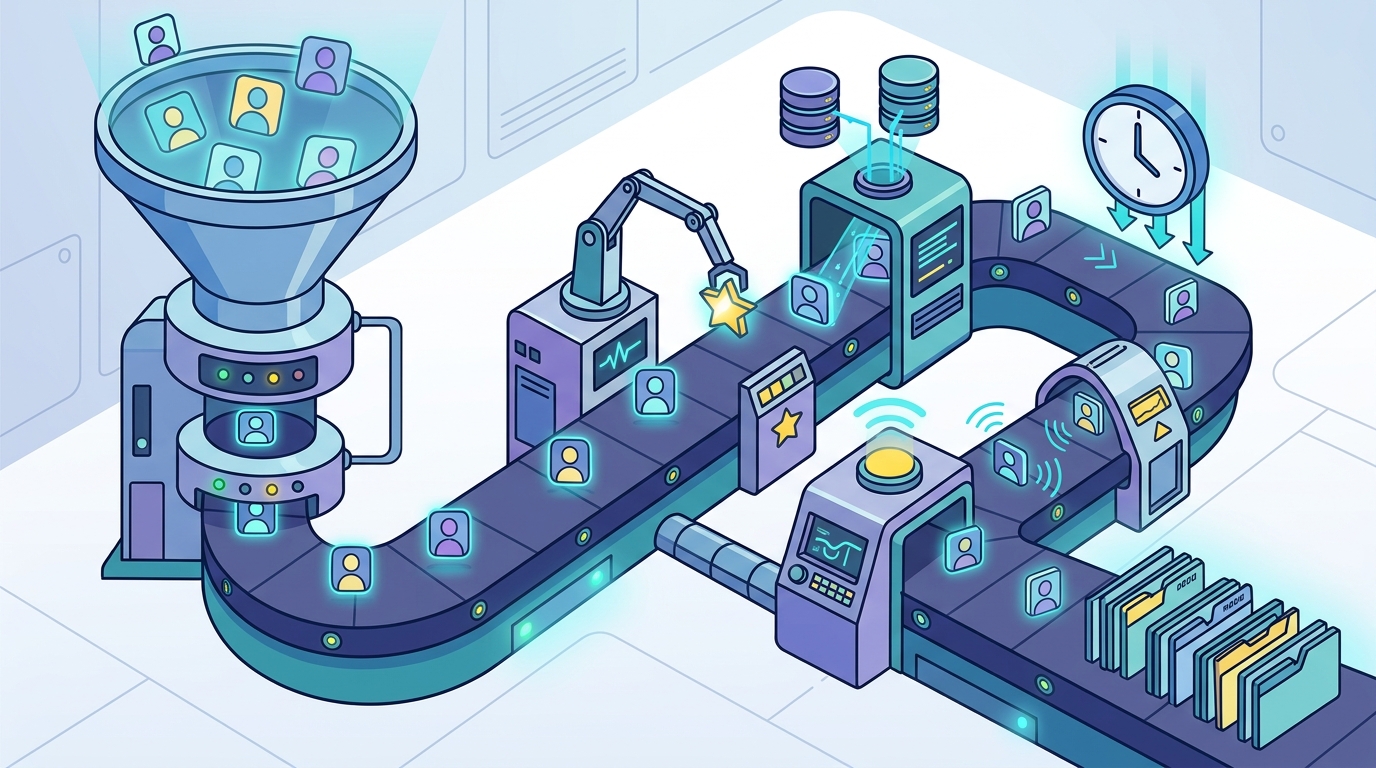
The most effective recruiting workflows utilize a human-in-the-loop (HITL) approach. This means that while AI handles data processing and initial screening, human recruiters make the final decisions on hiring. AI should be viewed as a decision support system, not a decision maker. Recruiters bring emotional intelligence, cultural assessment, and nuanced judgment that algorithms cannot replicate.
Train your recruiting team on how to interpret AI outputs. They need to understand the limitations of the technology and know when to override an AI recommendation. For example, if an AI scores a candidate low due to a non-traditional career path, a recruiter might recognize the unique value that path brings. Empower your team to challenge the data.
Regularly review AI recommendations against actual hiring outcomes. This feedback loop allows you to refine the algorithms and ensure they remain aligned with your business goals. If the AI consistently recommends candidates who do not perform well in the role, the model needs retraining. This continuous improvement cycle is essential for long-term success.
Compliance and Regulatory Adherence
As AI becomes more prevalent in hiring, regulatory scrutiny is increasing. Laws such as the New York City Local Law 144 require audits of automated employment decision tools to ensure they do not discriminate based on protected characteristics. Stay informed about local, state, and federal regulations that apply to your recruiting practices.
Implement robust data privacy measures. Candidate data is sensitive personal information. Ensure that your AI tools comply with GDPR, CCPA, and other relevant privacy laws. This includes obtaining proper consent for data collection and providing candidates with the right to access and delete their data. Protecting candidate privacy is not just a legal requirement but a trust-building exercise.
Document your compliance efforts. Maintain records of bias audits, data privacy protocols, and algorithmic decision-making processes. This documentation is crucial for demonstrating due diligence in the event of a regulatory inquiry. For more information on navigating these complexities, check our FAQ section.
Key Takeaways
- Audit Your Workflow: Identify bottlenecks in resume screening and scheduling before implementing AI tools.
- Combat Bias: Regularly audit training data and algorithms to prevent discriminatory outcomes.
- Integrate Systems: Ensure AI tools connect seamlessly with your existing ATS and HRIS for unified data.
- Human Oversight: Maintain a human-in-the-loop framework for all final hiring decisions.
- Enhance Experience: Use AI to provide timely, personalized communication to candidates.
- Ensure Compliance: Adhere to local laws like NYC Local Law 144 regarding automated employment tools.
- Measure ROI: Track time-to-hire and quality-of-hire metrics to justify AI investment.
Frequently Asked Questions
How does AI reduce bias in recruiting?
AI can reduce bias by focusing on skills and qualifications rather than demographic indicators, provided the training data is diverse and regularly audited for fairness.
What is the role of the recruiter in an AI-driven workflow?
The recruiter acts as the final decision-maker, providing context, cultural fit assessment, and emotional intelligence that AI cannot replicate.
How do I ensure candidate data privacy?
Implement strict data governance policies, obtain explicit consent, and ensure your AI vendors comply with GDPR and CCPA regulations.
Can AI replace human recruiters?
No, AI augments recruiters by handling repetitive tasks, allowing them to focus on strategic relationship building and complex decision-making.
What metrics should I track to measure AI success?
Track time-to-hire, cost-per-hire, quality-of-hire, and candidate satisfaction scores to evaluate the impact of AI implementation.
How often should I audit my AI algorithms?
Conduct regular audits, at least quarterly, to check for drift in performance and emerging biases in the data.
What is the best way to start with AI in recruiting?
Start with a pilot program in a high-volume or specific department to test integration and measure ROI before scaling.
Next Steps
Implementing AI in your recruiting workflow is a strategic imperative for staying competitive in today's talent market. By following these best practices, you can harness the power of technology while maintaining the human touch that defines great hiring. To explore how Match2 can help you build a connected candidate recruiting solution, contact our team today for a personalized demo.