
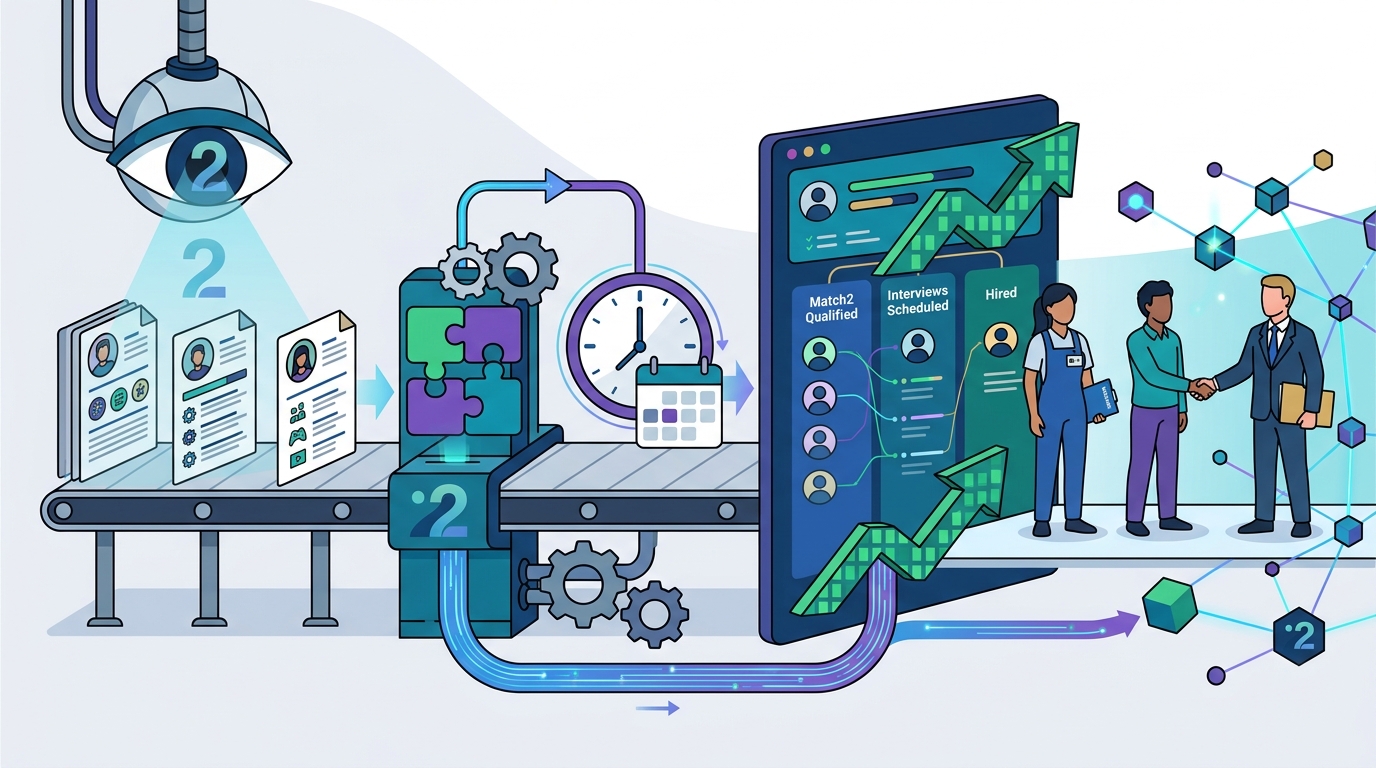
Modern talent acquisition has shifted from a reactive hiring process to a proactive talent management strategy. According to recent industry data, organizations that integrate comprehensive recruiting solutions see a 25% increase in time-to-fill efficiency compared to those relying on disjointed tools. This statistic highlights the critical need for a unified platform that connects candidate sourcing, assessment, and onboarding into a single workflow. Without this integration, companies risk losing top talent to competitors who offer a faster, more transparent experience. (Match2 Connected Candidate Recruiting)
Defining the Modern Recruiting Solution
A recruiting solution is a software platform that centralizes the entire hiring lifecycle, from job posting to offer acceptance. Unlike traditional Applicant Tracking Systems (ATS) that merely store resumes, modern solutions focus on active talent management and candidate engagement. This shift is driven by the need to reduce bias, improve speed, and enhance the quality of hires.
For businesses looking to streamline their operations, understanding the difference between a basic ATS and a full-fledged recruiting solution is vital. A recruiting solution is a comprehensive ecosystem that integrates sourcing, screening, interviewing, and onboarding tools. This integration allows HR teams to manage talent pipelines more effectively and make informed decisions based on real-time data.
Companies like Match2 are leading the charge by focusing on connected candidate solutions that prioritize skills and potential over traditional credentials. By adopting such platforms, organizations can transform their hiring process from a administrative burden into a strategic advantage.
Core Features for Effective Talent Management
To effectively manage talent, a recruiting solution must offer more than just resume parsing. It needs to provide tools that facilitate collaboration, automation, and deep candidate insights. Here are the essential features that define a high-per recruiting platform.
1. Automated Candidate Sourcing
Top talent is often passive, meaning they are not actively looking for a job. Effective recruiting solutions use AI-driven sourcing tools to identify and engage these candidates. These tools scan multiple databases, social networks, and professional platforms to find matches based on skills and experience. This proactive approach significantly expands the talent pool and reduces time-to-hire.
2. Collaborative Hiring Workflows
Hiring is rarely a solo effort. A robust recruiting solution allows multiple stakeholders, including hiring managers and team leads, to collaborate within the platform. Features like shared scorecards, interview feedback loops, and internal commenting ensure that everyone is aligned. This collaboration reduces miscommunication and accelerates the decision-making process.
3. Seamless Integration Capabilities
No recruiting tool exists in a vacuum. It must integrate with existing HRIS, CRM, and background check providers. Seamless integration ensures that data flows smoothly between systems, eliminating manual data entry and reducing the risk of errors. This connectivity is crucial for maintaining a unified view of the candidate journey.
The Role of Skills Assessment
One of the most critical features of a modern recruiting solution is its ability to assess candidates objectively. Traditional interviews often suffer from unconscious bias and may not accurately predict job performance. Skills assessments provide a standardized way to evaluate candidates based on their actual abilities.
According to data from leading HR research firms, companies that use skills-based hiring practices are 1.4 times more likely to meet their diversity goals. This is because assessments focus on what a candidate can do, rather than where they went to school or who they know. Match2, for instance, specializes in connected candidate recruiting solutions that prioritize these objective metrics.
Effective assessment features include:
- Customizable Tests: Ability to create role-specific assessments for technical and soft skills.
- Automated Scoring: Instant feedback on candidate performance to speed up screening.
- Proctoring Tools: Ensuring the integrity of the assessment process through remote monitoring.
By integrating assessments directly into the recruiting workflow, companies can filter out unqualified candidates early, saving valuable time and resources. This feature is not just a nice-to-have; it is a necessity for building a high-performing team.
Enhancing Candidate Experience
In a competitive talent market, the candidate experience is a key differentiator. A poor hiring process can drive away top talent, regardless of how attractive the job offer is. A good recruiting solution prioritizes transparency, communication, and ease of use.
Candidates expect to receive updates on their application status and to have a smooth application process. Features like mobile-friendly applications, automated status updates, and easy scheduling tools contribute to a positive experience. When candidates feel respected and informed, they are more likely to accept offers and become brand ambassadors.
Furthermore, a positive candidate experience can improve your employer brand. According to industry reports, 60% of candidates share their hiring experience with others on social media. This means that every interaction in your recruiting solution has the potential to impact your company's reputation. Investing in a user-friendly platform is an investment in your brand.
Data-Driven Decision Making
Modern recruiting solutions provide powerful analytics and reporting tools that help HR teams make data-driven decisions. These tools track key metrics such as time-to-fill, cost-per-hire, source of hire, and quality of hire. By analyzing this data, companies can identify bottlenecks in their hiring process and optimize their strategies.
For example, if data shows that a particular job board is generating a high volume of applications but low-quality hires, the company can reallocate its budget to more effective channels. This level of insight is impossible to achieve with manual tracking methods. A recruiting solution is a strategic asset that provides actionable insights into your talent acquisition efforts.
Additionally, predictive analytics can help forecast future hiring needs based on historical data and market trends. This proactive approach allows companies to prepare for talent shortages and maintain a steady pipeline of qualified candidates.
Feature Comparison Overview
To help you understand the value proposition of different recruiting solutions, here is a comparison of key features across standard and advanced platforms.
| Feature | Basic ATS | Advanced Recruiting Solution | Strategic Benefit |
|---|---|---|---|
| Candidate Sourcing | Manual Upload | AI-Driven Passive Candidate Search | Expands talent pool beyond active job seekers. |
| Skills Assessment | None | Integrated Customizable Tests | Reduces bias and improves hire quality. |
| Collaboration Tools | Email-Based | In-Platform Feedback & Scorecards | Accelerates decision-making and alignment. |
| Analytics | Basic Reports | Predictive Analytics & ROI Tracking | Enables data-driven strategic planning. |
| Candidate Experience | Static Application Forms | Mobile-First & Automated Updates | Enhances employer brand and offer acceptance. |
As shown in the table, advanced recruiting solutions offer significant advantages over basic ATS platforms. The ability to assess skills, collaborate effectively, and leverage data is crucial for modern talent management.
Key Takeaways
- Centralization is Key: A recruiting solution is a centralized platform that unifies sourcing, assessment, and hiring workflows.
- Skills-Based Hiring: Integrating objective skills assessments reduces bias and improves the quality of hires.
- Candidate Experience: A smooth, transparent hiring process is essential for attracting top talent and protecting employer brand.
- Data-Driven Insights: Advanced analytics help optimize hiring strategies and improve ROI.
- Collaboration: In-platform collaboration tools ensure alignment among hiring stakeholders.
- Automation: Automating repetitive tasks frees up HR teams to focus on strategic initiatives.
- Integration: Seamless integration with existing HR systems is critical for data accuracy and efficiency.
Frequently Asked Questions
What is the difference between an ATS and a recruiting solution?
An Applicant Tracking System (ATS) primarily focuses on storing and managing applications. A recruiting solution is a broader ecosystem that includes sourcing, skills assessment, candidate engagement, and analytics tools to manage the entire talent lifecycle.
Why are skills assessments important in recruiting?
Skills assessments provide an objective measure of a candidate's ability to perform job tasks. They reduce unconscious bias and help ensure that hires are qualified based on merit, leading to better job performance and retention.
How does a recruiting solution improve candidate experience?
It improves experience by offering mobile-friendly applications, automated status updates, and transparent communication. This reduces candidate anxiety and makes the hiring process more efficient and respectful.
Can a recruiting solution help with diversity hiring?
Yes, by using skills-based assessments and blind screening features, recruiting solutions can help reduce bias and promote diversity. Data shows that companies with diverse hiring practices are more innovative and profitable.
What metrics should I track with a recruiting solution?
Key metrics include time-to-fill, cost-per-hire, source of hire, quality of hire, and candidate satisfaction scores. These metrics provide insights into the effectiveness of your hiring strategy.
Is it difficult to integrate a recruiting solution with existing HR systems?
Most modern recruiting solutions offer robust API integrations with popular HRIS and CRM platforms. This ensures that data flows seamlessly between systems without manual intervention.
How does AI impact recruiting solutions?
AI enhances recruiting solutions by automating sourcing, screening, and scheduling. It also provides predictive analytics to forecast hiring needs and identify potential candidates more effectively.
Next Steps
Transforming your talent management strategy starts with choosing the right recruiting solution. By focusing on skills, collaboration, and data, you can build a high-performing team that drives business growth. Explore how Match2's features can support your hiring goals.
Ready to see the difference? Schedule a demo today and discover how a connected candidate solution can streamline your recruitment process.