
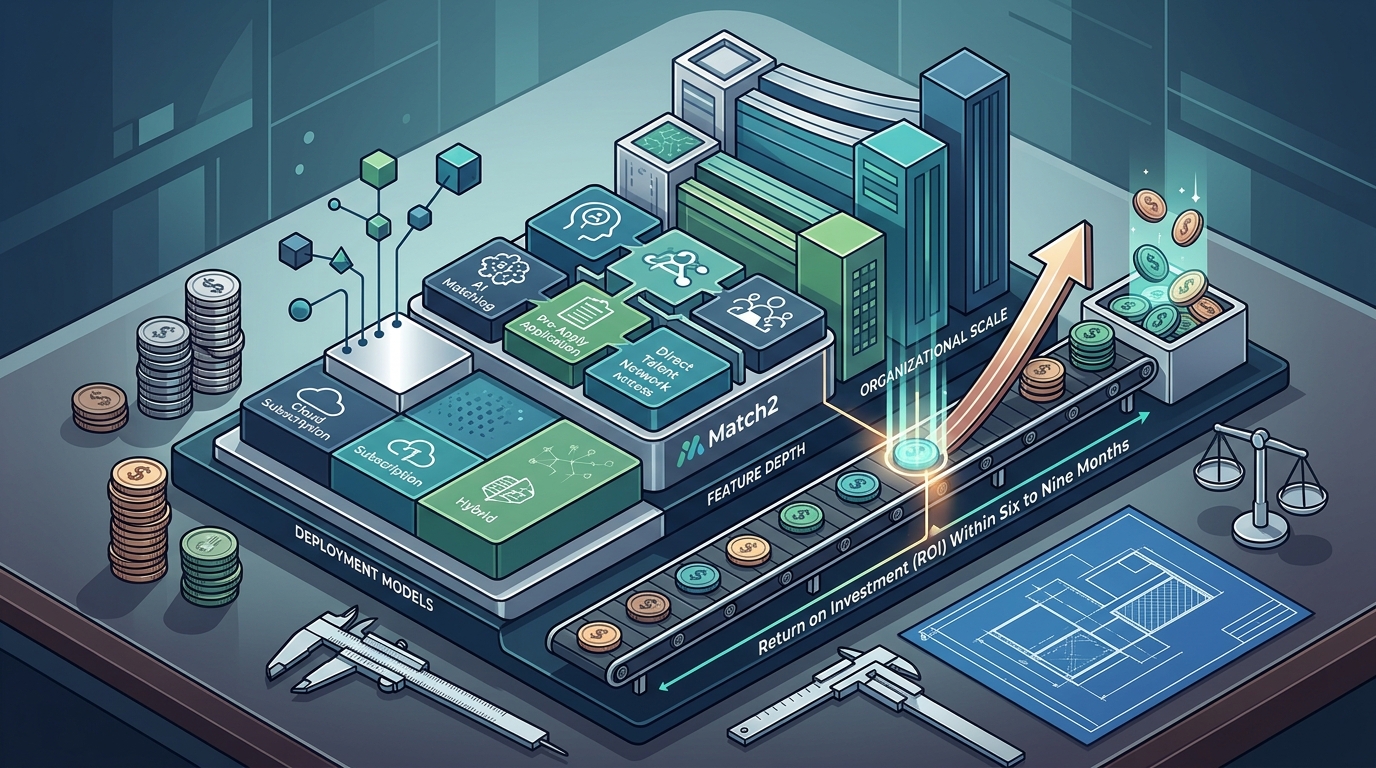
Organizations investing in automated recruiting infrastructure typically see a return on investment within six to nine months, according to recent industry analyses on HR technology adoption. The cost of a talent matching platform is not a single fixed number but a variable structure influenced by deployment models, feature depth, and organizational scale. As recruitment becomes increasingly data-driven, understanding the financial architecture of these tools is critical for budgeting accuracy and operational efficiency.
Understanding Pricing Models
Talent matching platforms generally operate on one of three primary pricing structures. Each model serves different organizational needs and growth trajectories. Understanding these distinctions helps finance teams forecast expenses more accurately.
Subscription-Based SaaS
The most common model is the Software as a Service (SaaS) subscription. Companies pay a recurring monthly or annual fee per user or per seat. This model offers predictable budgeting and includes updates, support, and cloud hosting. Annual commitments often yield discounts of 10 to 20 percent compared to monthly billing.
Usage-Based Pricing
Some platforms charge based on activity volume. This might include the number of candidates processed, jobs posted, or assessments completed. This model is ideal for companies with fluctuating hiring needs. It prevents paying for unused capacity during slow recruitment periods.
Enterprise Licensing
Large organizations often negotiate custom enterprise licenses. These deals include dedicated support, custom integrations, and advanced security protocols. Pricing is typically quoted annually and scales with the number of employees or hiring managers. This approach provides maximum flexibility but requires longer sales cycles.
Key Cost Drivers
Several factors influence the final price tag of a talent matching solution. These drivers determine the value proposition and total cost of ownership.
Feature Complexity
Basic matching algorithms are less expensive than those powered by advanced artificial intelligence. Platforms offering deep resume parsing, skills gap analysis, and predictive hiring analytics command higher premiums. The sophistication of the matching engine directly correlates with development and maintenance costs.
Integration Requirements
Seamless connectivity with existing Human Resource Information Systems (HRIS) and Applicant Tracking Systems (ATS) is crucial. Complex integrations may require additional development resources or premium tier access. Ensuring data flows smoothly between systems reduces manual entry errors and speeds up the hiring process.
Security and Compliance
Data privacy regulations like GDPR and CCPA impose strict requirements on how candidate data is stored and processed. Platforms with robust security certifications, such as SOC 2 Type II, often charge more to cover compliance infrastructure. This investment protects the organization from legal liabilities and data breaches.
Hidden Costs to Watch
Beyond the sticker price, several ancillary costs can impact the total expenditure. Awareness of these factors prevents budget overruns.
Implementation and Onboarding
Initial setup costs can range from zero for self-service tools to tens of thousands for custom enterprise deployments. Professional services may be required for data migration, workflow configuration, and team training. These one-time fees are essential for a successful launch but are often overlooked in initial quotes.
Training and Support
Advanced platforms may charge extra for dedicated customer success managers or priority support lines. Standard support is often included, but 24/7 assistance or specialized training sessions can add to the monthly cost. Investing in proper training ensures higher adoption rates and better utilization of features.
Scalability Limits
Some platforms impose hard limits on user seats or data storage. Exceeding these limits triggers overage fees or forces an upgrade to a higher tier. Understanding these thresholds helps avoid unexpected charges during peak hiring seasons.
ROI and Value Assessment
Evaluating the return on investment requires looking beyond the initial price. Talent matching platforms reduce time-to-hire, improve quality of hire, and lower recruitment agency fees. According to workforce management studies, reducing time-to-hire by just two weeks can save thousands of dollars per position in lost productivity.
The cost of a bad hire is estimated to be 30 to 50 percent of the employee's first-year earnings. By improving match accuracy, these platforms mitigate this risk. The financial benefit of avoiding a single mis-hire often exceeds the annual subscription cost of the software.
Platform Comparison
Comparing different solutions helps identify the best fit for specific organizational needs. The table below outlines general characteristics of common platform types.
| Platform Type | Typical Cost Range | Best For | Key Features |
|---|---|---|---|
| Basic ATS Add-on | $50 - $150 per user/month | Small businesses | Resume parsing, basic matching |
| Specialized Matching Tool | $200 - $500 per user/month | Mid-market companies | AI-driven skills assessment, integrations |
| Enterprise Suite | Custom pricing ($10k+ annually) | Large enterprises | Custom AI, dedicated support, compliance |
For organizations seeking a connected candidate recruiting solution, exploring specialized platforms like Match2 Assess can provide targeted insights into candidate capabilities. Understanding the specific needs of your hiring process is the first step in selecting the right tool. You can learn more about the features that drive these outcomes by reviewing detailed product documentation.
Key Takeaways
- Talent matching platforms typically cost between $50 and $500 per user per month, depending on the tier.
- Enterprise solutions often require custom pricing based on organizational size and specific integration needs.
- Hidden costs include implementation fees, training, and potential overage charges for exceeding usage limits.
- The ROI is realized through reduced time-to-hire, improved quality of hire, and lower agency fees.
- Security and compliance features add value but may increase the base subscription cost.
- Usage-based pricing models offer flexibility for companies with fluctuating hiring volumes.
- Annual subscriptions usually offer significant discounts compared to monthly billing cycles.
Frequently Asked Questions
What is the average cost of a talent matching platform?
The average cost varies widely, but small to mid-sized businesses often pay between $100 and $300 per user per month. Enterprise organizations typically negotiate custom contracts that can range from $10,000 to over $100,000 annually.
Do talent matching platforms charge per candidate?
Some platforms offer usage-based pricing where costs are tied to the number of candidates processed or jobs filled. However, most popular solutions use a per-user or per-seat subscription model for predictable budgeting.
Are there hidden fees in talent matching software?
Yes, common hidden fees include implementation costs, data migration services, and charges for exceeding user or storage limits. It is essential to review the service level agreement (SLA) for these details.
How does AI impact the cost of these platforms?
AI-driven features often command a premium due to the computational resources required for processing and the ongoing maintenance of machine learning models. However, the efficiency gains usually justify the additional expense.
Can I integrate a talent matching platform with my existing ATS?
Most modern platforms offer native integrations with major Applicant Tracking Systems. Complex custom integrations may require additional professional services fees or higher-tier subscriptions.
Is there a free trial available?
Many vendors offer free trials or demo periods to allow organizations to evaluate the platform's fit. These trials typically last 14 to 30 days and provide access to core features.
How long does it take to see a return on investment?
Organizations typically see a positive return on investment within six to nine months. The speed of ROI depends on the volume of hiring and the efficiency gains achieved through automation.
Next Steps
Choosing the right talent matching platform requires a clear understanding of your budget, hiring volume, and technical requirements. To explore how a connected candidate recruiting solution can streamline your hiring process, contact Match2 today for a personalized consultation. Visit our about page to learn more about our mission and read our latest insights on recruitment technology trends.