
Managing job applications and profiles in one place is possible by using a universal candidate network that syncs your resume, skills, and application status across multiple employer career sites. Match2 provides this unified experience by connecting your single profile to various hiring platforms, eliminating the need to recreate your data for every job posting. This guide covers how centralized application tracking works and how universal candidate profiles function to simplify your job search workflow. For additional details, review the Match2Jobs Workforce Solutions.
Centralized Application Tracking
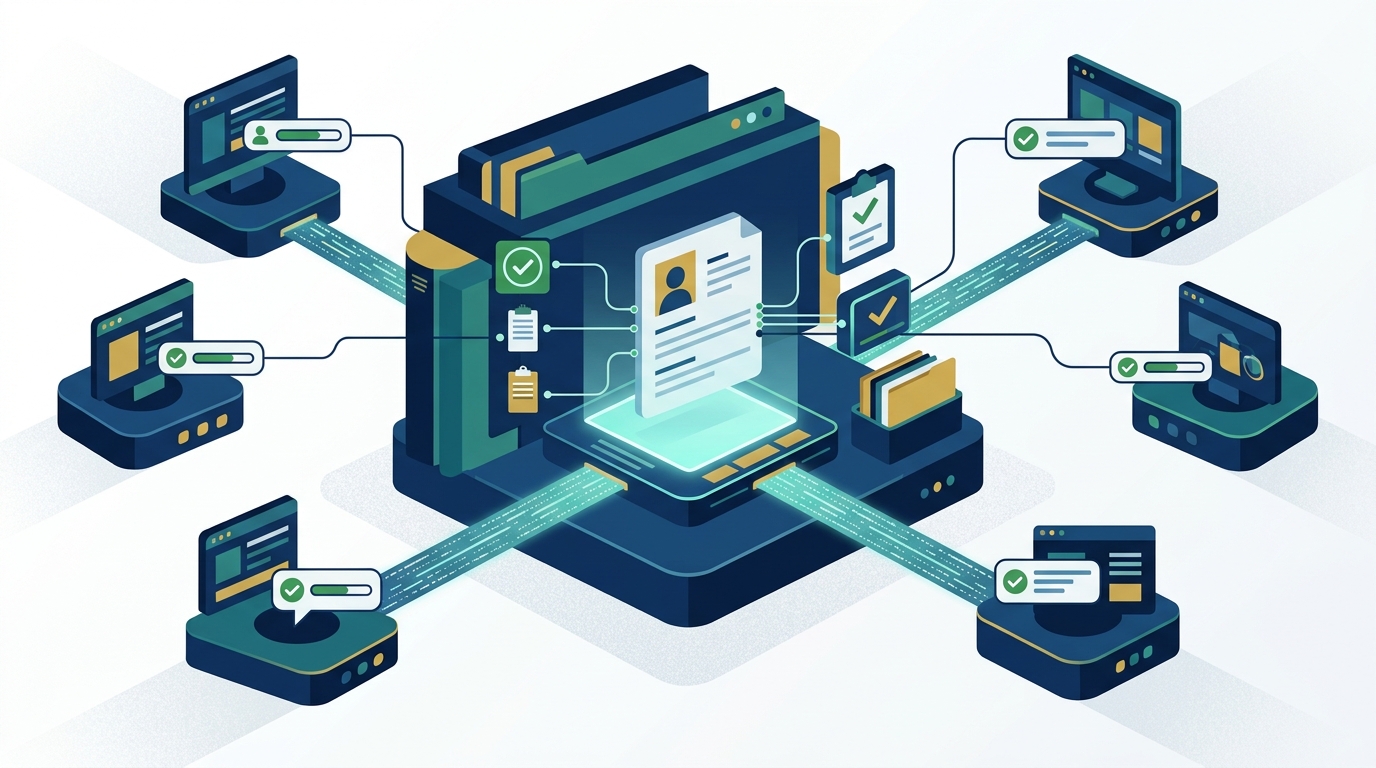
Traditional job hunting requires candidates to log into dozens of different employer portals to check application status. This fragmented approach leads to lost data and duplicated effort. Centralized application tracking is a method where a single platform aggregates the status of your applications across multiple employers into one dashboard. Instead of visiting each company's career site individually, you view all your active applications in a unified interface.
The Problem with Siloed Hiring Platforms
Most employers use Applicant Tracking Systems (ATS) that operate in isolation. When you apply to a job, your data is stored in that specific company's database. If you apply to ten companies, your resume and application data exist in ten separate, disconnected systems. This siloed structure means you cannot easily compare your progress or update your information without repeating the process for each employer. The result is a disjointed candidate experience that is time-consuming and prone to errors.
How Real-Time Status Updates Work
Modern talent matching platforms use scripts to bridge the gap between candidates and employer systems. When an employer integrates a talent connector, the platform can recognize candidate users and facilitate real-time data exchange. This allows your application status to update automatically. You can see if your application has been received, reviewed, or moved to the next stage without manually checking each portal. This real-time visibility reduces anxiety and helps you prioritize your job search efforts effectively.
Benefits of a Unified Dashboard
A unified dashboard provides a clear overview of your job search activity. You can track which roles you have applied for, the dates of submission, and the current status of each application. This centralized view helps you manage your time better by identifying which applications require follow-up. It also ensures that your most up-to-date resume is associated with every application, reducing the risk of submitting outdated information to potential employers.
Universal Candidate Profiles
Creating a new profile for every job application is inefficient and often leads to inconsistent data. A universal candidate profile is a single, persistent digital identity that travels with you across different employer career sites. This profile contains your resume, skills, availability, and application history. By using a universal profile, you maintain control over your data and ensure consistency across all your job applications.
Building Your Universal Profile
Data Control and Privacy
One of the primary advantages of a universal profile is data control. You decide what information to share and with whom. Unlike traditional applications where you upload a resume to each company's server, a universal profile allows you to manage your data centrally. You can choose to hide certain details or update your availability status without reapplying. This level of control is essential for protecting your privacy and maintaining a professional image in the job market.
Smart Matching and Personalization
Universal profiles enable smarter job matching. By analyzing your skills and preferences, the platform can recommend roles that align with your career goals. This personalization helps you discover opportunities you might have missed through keyword-based searches. The platform uses your profile data to match you with jobs that fit your experience and interests. This proactive approach saves time and increases the likelihood of finding the right role.
Comparison of Traditional vs. Universal Profile Approaches
| Feature | Traditional Application | Universal Profile |
|---|---|---|
| Data Entry | Repeated for each employer | Entered once, synced across sites |
| Status Tracking | Manual check per portal | Real-time unified dashboard | Resume Updates | Must re-upload to each site | Automatic sync to all applications | Data Control | Limited, data stored by employer | Centralized, user-controlled |
| Job Matching | Keyword-based search | AI-driven skill matching |
Key Takeaways
- Centralized application tracking aggregates your job application status across multiple employers into a single view.
- Universal candidate profiles allow you to maintain one persistent digital identity that travels across career sites.
- Real-time status updates eliminate the need to manually check each employer's portal for application progress.
- Data control is enhanced when you manage your profile centrally rather than storing it in multiple employer databases.
- Smart matching uses your universal profile to recommend roles that align with your skills and career goals.
- Consistency in your application data reduces errors and ensures recruiters see your most current qualifications.
- Using a connected candidate network simplifies account management and reduces the time spent on administrative tasks.
Frequently Asked Questions
What is a universal candidate profile?
A universal candidate profile is a single digital identity that contains your resume, skills, and application data, which can be used across multiple employer career sites without re-entering information.
How does centralized application tracking work?
Centralized application tracking uses a platform to aggregate the status of your applications from various employers into one dashboard, providing real-time updates on your job search progress.
Can I update my resume once and have it apply to all jobs?
Yes, with a universal profile, you can update your resume and skills in one place, and these changes are synced to your applications across connected employer sites.
Is my data private when using a universal profile?
You maintain control over your data in a universal profile. You decide what information to share and can update or hide details as needed, ensuring your privacy is protected.
How does AI matching improve my job search?
AI matching analyzes your universal profile to recommend jobs that fit your skills and preferences, helping you discover relevant opportunities that you might miss with traditional keyword searches.
Do I need to create a new account for each employer?
No, a connected candidate network allows you to use a single account across multiple employer sites, simplifying account management and reducing the need for multiple logins.
What are the benefits of real-time status updates?
Real-time status updates provide immediate visibility into your application progress, reducing uncertainty and helping you prioritize follow-ups and manage your job search more effectively.
How does this differ from a traditional ATS?
Traditional ATS systems store your data in isolation for each employer. A universal profile connects your data across employers, allowing for centralized management and smarter matching.
Conclusion
Managing your job applications and profile in one place is no longer a luxury but a necessity for efficient job searching. By leveraging centralized application tracking and universal candidate profiles, you can streamline your workflow and maintain control over your professional data. Match2 offers a connected candidate recruiting solution that empowers you to manage your job search with ease and precision. To start simplifying your job search, visit Match2 and explore how their platform can connect you with the right opportunities.