

Generative AI has fundamentally altered the landscape of talent acquisition. While it offers efficiency for recruiters, it also empowers bad actors to automate the submission of low-quality or fraudulent applications. Recent industry analysis indicates that the volume of AI-generated resumes has surged, creating a significant noise-to-signal ratio for hiring teams. This shift demands that organizations move beyond simple keyword matching and implement robust verification layers directly at the point of entry.
Understanding the AI Application Fraud Threat
AI application fraud refers to the use of large language models to generate synthetic resumes, cover letters, and interview responses. This practice allows candidates to bypass traditional screening filters without possessing the requisite skills. The result is a recruitment pipeline clogged with irrelevant applications, increasing time-to-hire and reducing the quality of the candidate pool.
According to recent workforce technology reports, the adoption of generative AI by job seekers has increased by over 50% in the last two years. This statistic highlights the urgency for employers to adapt their screening processes. Traditional Applicant Tracking Systems (ATS) often rely on static keyword matching, which is easily manipulated by AI tools. Consequently, recruiters spend more time filtering out synthetic profiles than engaging with genuine talent.
The core issue lies in the disconnect between the application interface and the verification of skills. When a candidate submits an application, the system typically accepts the data at face value. Without immediate validation, fraudulent profiles enter the workflow, wasting recruiter hours and potentially leading to poor hiring decisions. Addressing this requires a platform that prioritizes data integrity and skill verification from the initial interaction.
How Match2 Addresses Fraud via Connected Candidates
Match2 tackles AI fraud not by blocking applications, but by verifying the authenticity of the candidate through a "Connected Candidate" model. This approach shifts the focus from document parsing to identity and skill validation. By requiring candidates to connect their professional profiles and verify their credentials, Match2 creates a layer of accountability that AI-generated content cannot easily replicate.
The platform utilizes a proprietary assessment engine that evaluates candidates based on actual performance rather than self-reported claims. This method ensures that the data entering the recruitment pipeline is accurate and reliable. When candidates engage with the assessment process, they provide real-time evidence of their capabilities, reducing the risk of fraud significantly.
Furthermore, Match2's architecture is designed to integrate seamlessly with existing HR tech stacks. This integration allows organizations to maintain their current workflows while gaining enhanced fraud detection capabilities. The platform's ability to sync data across multiple touchpoints ensures that verification is continuous and comprehensive. For more details on the platform's core capabilities, you can explore the features page.
The Role of Skills Assessment in Fraud Detection
Skills assessment is the primary defense against AI application fraud. By requiring candidates to complete validated tests, employers can distinguish between those who possess the skills and those who merely claim them. AI tools can generate text, but they cannot easily simulate the nuanced problem-solving abilities required for many roles.
Match2's assessment framework is built on rigorous psychometric principles. Each test is designed to measure specific competencies relevant to the job description. This targeted approach ensures that the evaluation is both fair and effective. Candidates who rely on AI-generated content often struggle with these dynamic assessments, as they require real-time cognitive processing and domain-specific knowledge.
The platform also employs adaptive testing technologies that adjust the difficulty of questions based on the candidate's performance. This method provides a more accurate measure of skill level and reduces the likelihood of cheating. For a deeper dive into the assessment methodologies, visit the assess section of the Match2 website.
Integrating Verification at the Career Site
The career site is the first point of contact between a candidate and an employer. It is also the most vulnerable point for AI fraud, as it is where applications are initially submitted. Integrating verification mechanisms at this stage is crucial for maintaining data integrity.
Match2 enables organizations to embed verification steps directly into the career site experience. This can include identity checks, skill assessments, and profile connections. By making verification a seamless part of the application process, employers can filter out fraudulent candidates early in the funnel. This proactive approach saves time and resources for both recruiters and candidates.
The platform also provides analytics and insights that help organizations monitor fraud trends. By tracking metrics such as application completion rates and assessment pass rates, employers can identify potential issues and adjust their strategies accordingly. For more information on how to implement these solutions, check out the blog for best practices and case studies.
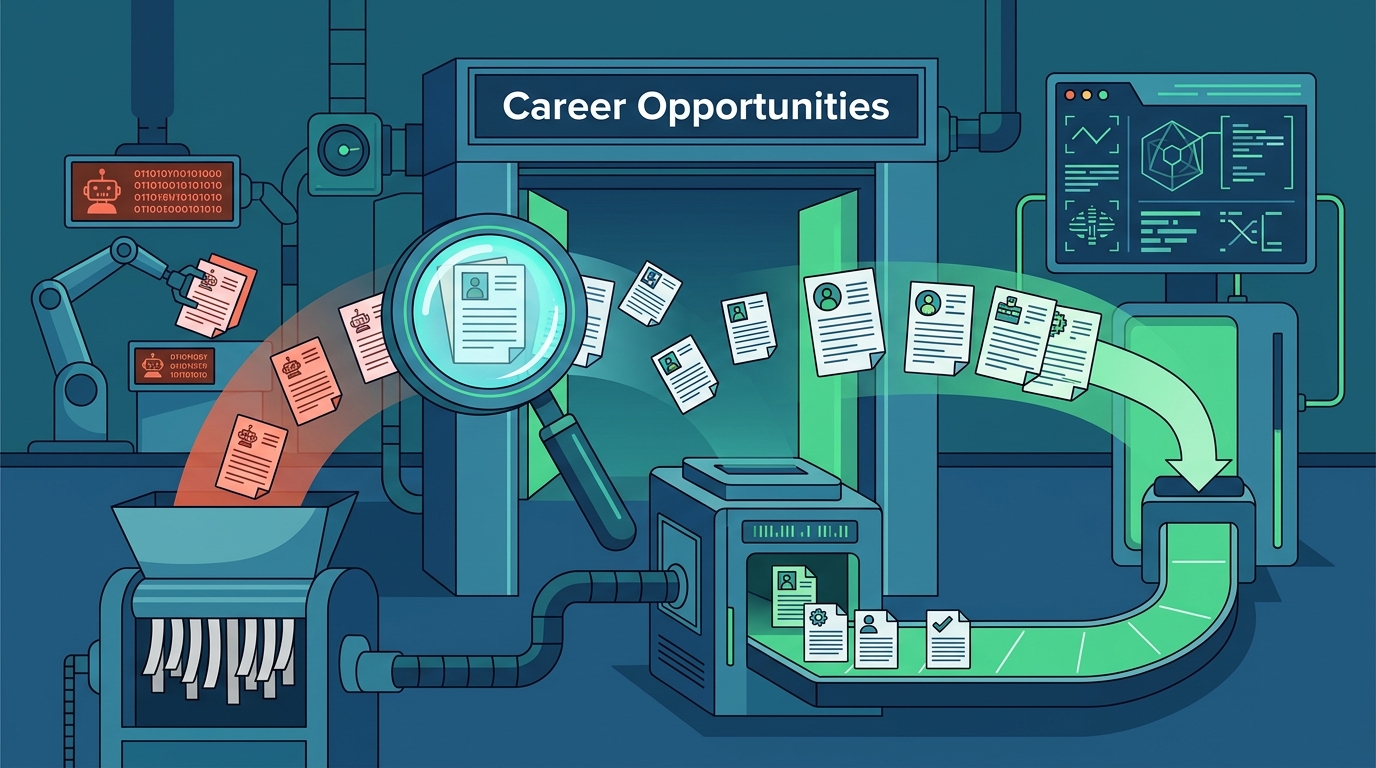
Comparing Fraud Prevention Strategies
Not all recruiting platforms address AI fraud in the same way. Some rely on post-hoc verification, while others integrate prevention into the core workflow. Understanding these differences is essential for selecting the right solution for your organization.
| Strategy | Fraud Detection Method | Impact on Candidate Experience | Implementation Complexity |
|---|---|---|---|
| Keyword Filtering | Blocks applications lacking specific terms | Low friction, but high false positive rate | Low |
| AI Detection Tools | Scans resumes for AI-generated text | Medium friction, potential privacy concerns | Medium |
| Skills Assessment | Validates skills through performance | Higher friction, but higher quality leads | Medium |
| Connected Candidate Model | Verifies identity and skills upfront | Seamless for verified users, filters fraud | High |
As shown in the table above, the Connected Candidate Model offers the most robust protection against AI fraud. By verifying candidates at the source, organizations can ensure that the data they receive is accurate and reliable. This approach aligns with the goals of modern talent acquisition, which prioritizes quality and efficiency.
Key Takeaways
- AI application fraud has increased significantly, with over 50% of job seekers using generative AI tools.
- Traditional ATS keyword filtering is ineffective against sophisticated AI-generated content.
- Match2 uses a Connected Candidate model to verify identity and skills at the point of entry.
- Skills assessments provide a reliable method for distinguishing genuine talent from fraudulent applicants.
- Integrating verification at the career site reduces the volume of low-quality applications.
- Adaptive testing technologies enhance the accuracy of skill evaluations.
- Organizations should prioritize platforms that offer proactive fraud prevention over reactive measures.
Frequently Asked Questions
What is AI application fraud?
AI application fraud is the use of generative AI tools to create synthetic resumes and cover letters, allowing candidates to bypass traditional screening filters without possessing the required skills.
How does Match2 prevent AI fraud?
Match2 prevents AI fraud by using a Connected Candidate model that requires candidates to verify their identity and skills through assessments before entering the recruitment pipeline.
Is skills assessment effective against AI-generated content?
Yes, skills assessment is highly effective because it evaluates real-time performance and problem-solving abilities, which AI tools cannot easily simulate.
Can I integrate Match2 with my existing career site?
Yes, Match2 is designed to integrate seamlessly with existing career sites and HR tech stacks, allowing for easy implementation of verification mechanisms.
What are the benefits of a Connected Candidate model?
A Connected Candidate model ensures data integrity, reduces fraud, and improves the quality of the candidate pool by verifying credentials upfront.
How does adaptive testing work?
Adaptive testing adjusts the difficulty of questions based on the candidate's performance, providing a more accurate measure of skill level and reducing the likelihood of cheating.
Where can I learn more about Match2's features?
You can learn more about Match2's features by visiting the features page or exploring the assessment section.
Next Steps
Protect your recruitment pipeline from AI application fraud by implementing a robust verification strategy. Match2 offers the tools and expertise you need to ensure data integrity and improve hiring outcomes. Contact the Match2 team today to schedule a demo and learn how our Connected Candidate model can transform your talent acquisition process. Visit the contact us page to get started.