

The modern hiring landscape is under siege by automated fraud. Recent industry data indicates that a significant percentage of job applications submitted online are generated by bots or AI scripts designed to game the system rather than reflect genuine human interest. This influx of low-quality data clogs applicant tracking systems, wastes recruiter hours, and distorts hiring metrics. For employers, the cost is not just time; it is the opportunity cost of missing top talent because the pipeline is flooded with noise. Understanding how to deploy AI recruiting solutions that detect and block these fraudulent submissions before they enter your workflow is no longer optional. It is a critical operational necessity for maintaining hiring integrity.
Understanding Bot and Fake Application Fraud
Bot fraud in recruiting refers to the use of automated software scripts to submit thousands of generic applications to job postings. These bots scan public job boards and company career sites, filling out forms with randomized or scraped data. The goal is often to generate ad revenue, test stolen credentials, or artificially inflate applicant numbers for third-party aggregators. Bot applications are not genuine candidates. They lack the nuance, history, and intent of human applicants.
Fake applications, on the other hand, may be generated by humans using AI writing tools to create polished but hollow resumes. These candidates often lack the specific skills required for the role but use keyword stuffing to bypass initial automated filters. This creates a dual threat: automated noise from bots and deceptive quality from AI-assisted fraudsters. Both types of applicants degrade the quality of your talent pool and increase the risk of bad hires.
According to recent cybersecurity reports, the volume of automated job applications has grown exponentially. This trend is driven by the ease of deploying scraping tools and the lack of robust verification mechanisms in many traditional applicant tracking systems. Employers who do not address this issue face declining efficiency and increased operational costs.
How AI Detects Fraudulent Submissions
Effective AI recruiting solutions use machine learning models to analyze application patterns in real-time. These systems look for anomalies that human reviewers might miss. For example, bots often submit applications at impossible speeds or from suspicious IP addresses. AI detection algorithms flag these behaviors instantly.
One critical component of detection is behavioral analysis. AI tools monitor how a user interacts with the application form. Do they pause to read the job description? Do they copy-paste text from a known source? Behavioral biometrics provide a layer of security that static data cannot. By analyzing mouse movements, typing speed, and navigation paths, AI can distinguish between a human candidate and a script.
Another layer is semantic analysis. AI models evaluate the content of resumes and cover letters for signs of AI generation. While this is a developing field, advanced models can identify patterns typical of large language models, such as overly generic phrasing or lack of personal specificities. This helps employers identify fake applications that might otherwise pass through initial keyword filters.
The Match2 Connected Candidate Approach
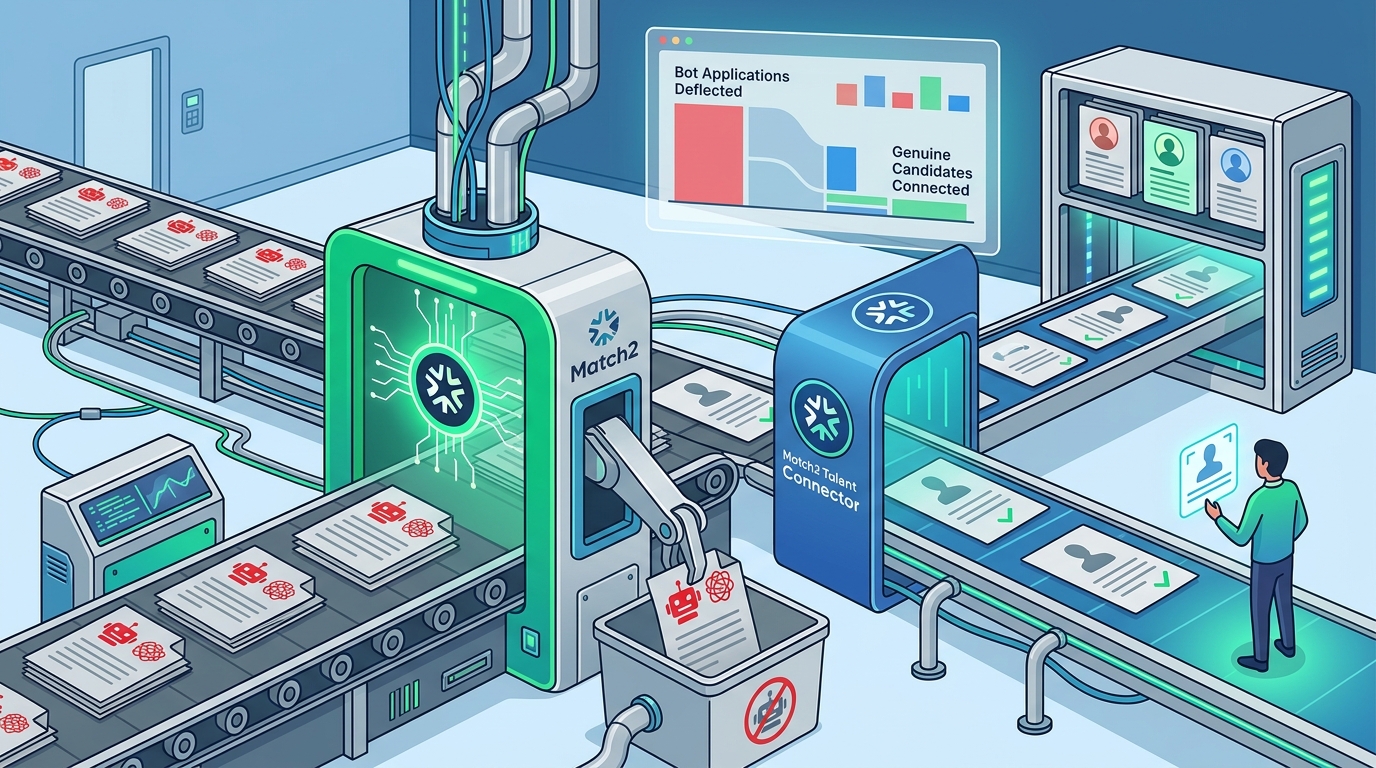
Match2 addresses the challenge of fake applications through its Connected Candidate Recruiting Solutions. The platform is designed to verify the authenticity of candidates before they reach the employer. This is achieved through a combination of identity verification and skills assessment.
The core of the Match2 methodology is the Assess module. This tool ensures that the person applying is the person who possesses the skills claimed on their resume. By requiring candidates to complete validated assessments, Match2 eliminates the possibility of bots submitting generic applications. Bots cannot perform complex, timed, or interactive assessments designed to measure true competency.
Furthermore, Match2 focuses on types of candidates that are verified and engaged. This means the platform prioritizes individuals who have been vetted for identity and skill authenticity. Employers using Match2 receive a pipeline of candidates who are not only qualified but also verified as real humans. This reduces the noise in the hiring process and allows recruiters to focus on high-potential talent.
The Features of the Match2 platform include seamless integration with existing HR systems. This ensures that verified candidates are routed directly to the appropriate hiring managers without manual intervention. The result is a streamlined hiring process that is both secure and efficient.
Essential Features for Fraud Prevention
When evaluating AI recruiting solutions, employers must look for specific capabilities that address bot and fake application threats. Not all AI tools are created equal. Some may offer basic resume parsing but lack the depth required for fraud detection.
Key features to prioritize include:
- Real-time Verification: The ability to verify identity and skills at the point of application.
- Behavioral Analysis: Monitoring user interaction patterns to detect automated scripts.
- Semantic Scanning: Analyzing resume content for signs of AI generation or keyword stuffing.
- Integration Capabilities: Seamless connection with existing applicant tracking systems to ensure verified data flows correctly.
Match2 excels in these areas by combining identity verification with skills assessment. This dual approach ensures that the candidate is both real and qualified. Employers who choose platforms with these features can significantly reduce the risk of hiring fraud.
Comparing Traditional vs. AI-Driven Screening
Traditional screening methods rely heavily on keyword matching and manual review. This approach is vulnerable to both bots and fake applications. Bots can easily mimic keywords, and human reviewers may be overwhelmed by the volume of applications, leading to oversight.
In contrast, AI-driven screening uses advanced algorithms to analyze multiple data points simultaneously. This includes identity, skills, behavior, and content. The result is a more accurate and secure hiring process.
| Feature | Traditional Screening | AI-Driven Screening (Match2) |
|---|---|---|
| Bot Detection | Low | High |
| Identity Verification | Manual/Post-Hire | Real-time/Pre-Hire |
| Skill Validation | Resume Claims Only | Assessment-Based |
| Efficiency | Low | High |
| Fraud Prevention | Reactive | Proactive |
As shown in the table above, AI-driven screening offers superior protection against fraud. By implementing these solutions, employers can ensure that their hiring pipeline is clean and reliable.
Key Takeaways
- Bot and fake applications are a growing threat to hiring integrity, costing employers time and resources.
- AI recruiting solutions use behavioral analysis and semantic scanning to detect fraudulent submissions.
- Match2's Connected Candidate approach verifies identity and skills before applications reach employers.
- Real-time verification is a critical feature for preventing bot fraud in the hiring process.
- AI-driven screening is more efficient and secure than traditional keyword-based methods.
- Employers should prioritize platforms that offer seamless integration with existing HR systems.
- Implementing robust fraud prevention measures protects the quality of the talent pipeline.
Frequently Asked Questions
How does AI detect fake applications?
AI detects fake applications by analyzing behavioral patterns, such as typing speed and mouse movements, and by scanning resume content for signs of AI generation or keyword stuffing. These methods help identify submissions that do not reflect genuine human intent.
What is the Match2 Connected Candidate solution?
The Match2 Connected Candidate solution is a recruiting platform that verifies the identity and skills of candidates before they apply. This ensures that employers receive only authentic, qualified applicants, reducing the risk of fraud.
Can bots bypass AI recruiting tools?
While bots are becoming more sophisticated, advanced AI recruiting tools use multi-layered detection methods, including behavioral biometrics and skills assessments, to identify and block fraudulent submissions. Match2's approach makes it extremely difficult for bots to succeed.
Why is identity verification important in hiring?
Identity verification ensures that the person applying is the person claiming the skills and experience. This prevents fraudsters from using stolen identities or fake credentials to gain employment, protecting the employer from legal and operational risks.
How does Match2 integrate with existing systems?
Match2 offers seamless integration with major applicant tracking systems. This allows verified candidates to be routed directly to hiring managers without manual data entry, streamlining the hiring process and improving efficiency.
What are the benefits of using AI for fraud prevention?
AI provides real-time detection of fraudulent activities, reduces the burden on human recruiters, and improves the overall quality of the talent pipeline. This leads to faster hiring times and better hiring outcomes.
Is AI recruiting solution expensive?
The cost of AI recruiting solutions varies, but the return on investment is often significant due to reduced time-to-hire and lower risk of bad hires. Match2 offers scalable solutions that can fit various organizational needs and budgets.
How does Match2 ensure candidate privacy?
Match2 adheres to strict data privacy regulations and employs robust security measures to protect candidate information. Identity and skill data are handled securely and used only for the purpose of verification and hiring.
Secure Your Hiring Pipeline
Stop letting bots and fake applications undermine your hiring efforts. Take control of your talent pipeline with Match2's Connected Candidate Recruiting Solutions. By verifying identity and skills upfront, you ensure that every candidate you review is a genuine, qualified individual. Contact Match2 today to schedule a demo and learn how our platform can transform your hiring process. Visit our About page to learn more about our mission and read our latest insights on recruiting trends.