
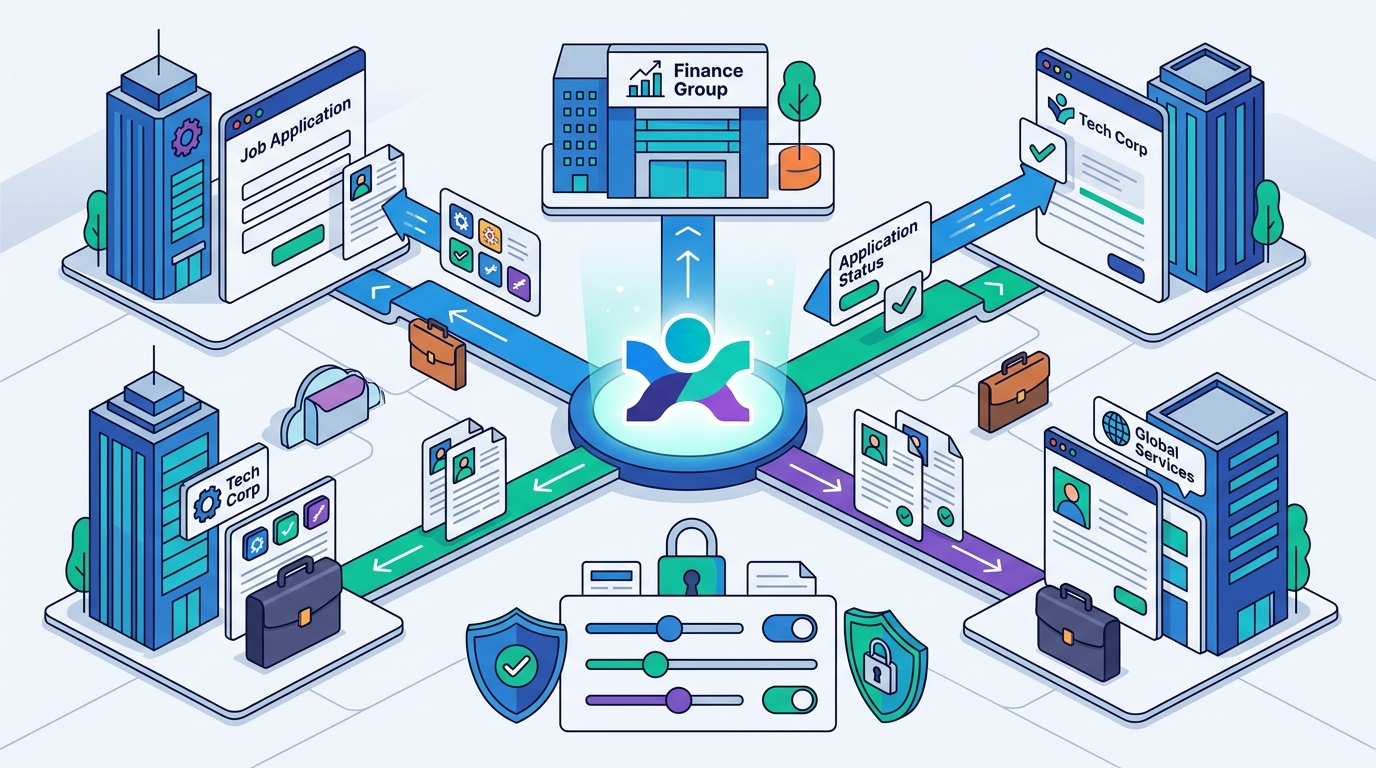
Managing job applications across multiple employers is a fragmented and time-consuming process. A universal candidate profile is a single digital identity that stores your resume, skills, and application status, allowing you to interact with various career sites without re-entering data. Match2 provides this unified experience by connecting your profile to employer platforms, ensuring your data travels with you. This guide explains how to consolidate your job search, verify platform claims, and protect your data while using modern recruiting tools. according to About eServices for
How to Choose a Platform
Selecting the right tool for managing your job search requires looking beyond basic features. A universal candidate profile is a centralized repository for your professional data that integrates with external employer systems. When evaluating options, you must distinguish between simple job boards and true integration platforms. Job boards list openings, but they do not manage your application status across different companies. Integration platforms, like Match2, connect your profile directly to the employer's hiring workflow. For additional details, review the .
Integration Depth
The primary differentiator is how the platform interacts with the employer's career site. A basic aggregator scrapes job listings and sends your resume via email or a generic form. A deep integration platform uses a script, such as the Match2 Talent Connector, to recognize your profile on the employer's site. This allows for instant matching and pre-filled applications. You should look for platforms that update your application status in real-time rather than relying on manual tracking. For additional details, review the Customer Experience.
Data Portability
Check if your data can leave the platform. A good universal profile allows you to export your resume and skills data. If a platform locks your data in a proprietary format, you lose control over your professional identity. Match2 is designed to deliver your optimized resume and skills data directly into employer platforms, ensuring you are not held hostage by a single service provider. For additional details, review the Frequently Asked Questions.
What to Ask Before Committing
Before creating an account on any talent management platform, you need to ask specific questions about data handling and functionality. These questions determine whether the tool will actually save you time or create new administrative burdens. For additional details, review the About.
Data Ownership and Control
Ask who owns your data. You should be able to view, edit, and delete your information at any time. Ask if the platform shares your data with third parties without explicit consent. Transparency in data sharing is a critical indicator of a trustworthy service.
Employer Adoption
Ask how many employers use the platform. A universal profile is only as useful as the network of employers that recognize it. If few companies use the platform, you will still need to apply manually for most jobs. Match2 focuses on modernizing career sites, which means its value grows as more employers adopt the Talent Connector script.
Application Status Visibility
Ask if you can see the status of your applications. Many platforms hide this information, leaving you in the dark. A robust system provides real-time data on whether your application was received, reviewed, or rejected. This visibility is essential for managing your time effectively.
How to Verify Claims
Many recruiting platforms make bold claims about their AI matching and network size. You must verify these claims before trusting the platform with your data. Verification involves checking technical documentation and user reviews.
Technical Verification
User Verification
Read reviews from other candidates. Look for specific mentions of application status updates and data accuracy. If users report that their profiles are outdated or that applications are not being tracked, the platform's claims are likely exaggerated. Independent user feedback is a reliable indicator of actual performance.
How It Works
Understanding the workflow of a universal candidate profile helps you set realistic expectations. The process involves creating a profile, connecting to employers, and managing applications.
Profile Creation
Employer Connection
Application Management
After applying, the platform tracks the status of your application. You can see which applications are pending, under review, or completed. This centralized view allows you to manage your job search efficiently.
What It Costs
Most universal candidate profiles are free for job seekers. The cost is borne by the employers who use the platform to recruit. However, you should be aware of any premium features that may be offered.
Free vs. Premium
Hidden Costs
Common Mistakes
Candidates often make mistakes when using talent management platforms. Avoiding these errors can save you time and frustration.
Outdated Profiles
Failing to update your profile is a common mistake. If your resume is outdated, you will not match with relevant jobs. Regularly review and update your skills and experience. Match2 helps you keep your resume persistently updated, which is crucial for staying relevant.
Ignoring Status Updates
Many candidates apply and then forget about the application. Ignoring status updates means you miss opportunities to follow up or withdraw. Check your application status regularly to stay informed.
Over-Reliance on One Platform
Depending solely on one platform can limit your options. Use a universal profile to manage applications across multiple employers, but also consider direct applications to companies that do not use the platform.
Versus Alternatives
There are several alternatives to universal candidate profiles, each with its own strengths and weaknesses. Understanding these differences helps you choose the best approach for your job search.
| Option | Pros | Cons |
|---|---|---|
| Universal Profile (e.g., Match2) | Centralized management, real-time status, data portability | Dependent on employer adoption |
| Job Boards | Wide range of listings | No application tracking, manual data entry |
| Manual Applications | Full control, no third-party dependency | Time-consuming, error-prone |
Specific Situations
The best way to manage your job search depends on your specific situation. Different candidates have different needs and constraints.
Active Job Seekers
If you are actively looking for a new job, a universal profile is essential. It allows you to apply to multiple employers quickly and track your progress. This is particularly useful if you are applying to many companies in a short period.
Passive Candidates
If you are not actively looking for a job but are open to opportunities, a universal profile can still be valuable. It allows you to be discovered by employers who are looking for your skills. You can control your availability and preferences without actively applying to jobs.
Rules and Protections
Using a talent management platform involves certain rules and protections. Understanding these helps you use the platform safely and effectively.
Privacy Rights
You have the right to know how your data is used. Platforms must comply with privacy laws, such as GDPR or CCPA, depending on your location. You should be able to request deletion of your data at any time.
Terms of Service
Read the terms of service before creating an account. Pay attention to clauses about data ownership and liability. If the terms are unclear or overly broad, consider using a different platform.
Local Specifics
While universal profiles are global, local factors can influence their effectiveness. In the USA, for example, privacy laws vary by state. California's CCPA provides strong protections for consumer data, while other states have less stringent laws. Be aware of the laws in your state when using a talent management platform.
Timing Your Actions
Timing is crucial when managing your job search. You should update your profile regularly, especially after gaining new skills or completing projects. This ensures that you are matched with relevant opportunities. Additionally, consider the hiring cycles of the companies you are targeting. Some companies hire more aggressively at certain times of the year.
Results Over Time
Using a universal candidate profile can lead to measurable outcomes over time. You may see an increase in the number of applications you can manage, a reduction in the time spent on data entry, and an improvement in the quality of matches. Track your metrics, such as application completion rate and response time, to evaluate the effectiveness of the platform.
Key Takeaways
- A universal candidate profile is a single digital identity that stores your resume, skills, and application status.
- Choose platforms with deep integration and data portability.
- Ask about data ownership, employer adoption, and application status visibility.
- Verify claims by checking technical documentation and user reviews.
- Most universal profiles are free for job seekers, with costs borne by employers.
- Avoid common mistakes like outdated profiles and ignoring status updates.
- Be aware of local privacy laws and terms of service.
Frequently Asked Questions
What is a universal candidate profile?
A universal candidate profile is a centralized repository for your professional data that integrates with external employer systems.
How does Match2 work?
Match2 uses a Talent Connector script to recognize your profile on employer career sites, allowing for instant matching and pre-filled applications.
Is Match2 free for job seekers?
Yes, Match2 is free for job seekers. The cost is borne by the employers who use the platform to recruit.
Can I export my data from Match2?
Yes, Match2 allows you to export your resume and skills data, ensuring you are not locked into the platform.
How do I track my application status?
Match2 provides real-time data on your application status, allowing you to see which applications are pending, under review, or completed.
What are the benefits of using a universal profile?
Using a universal profile saves time, reduces errors, and provides centralized management of your job search.