

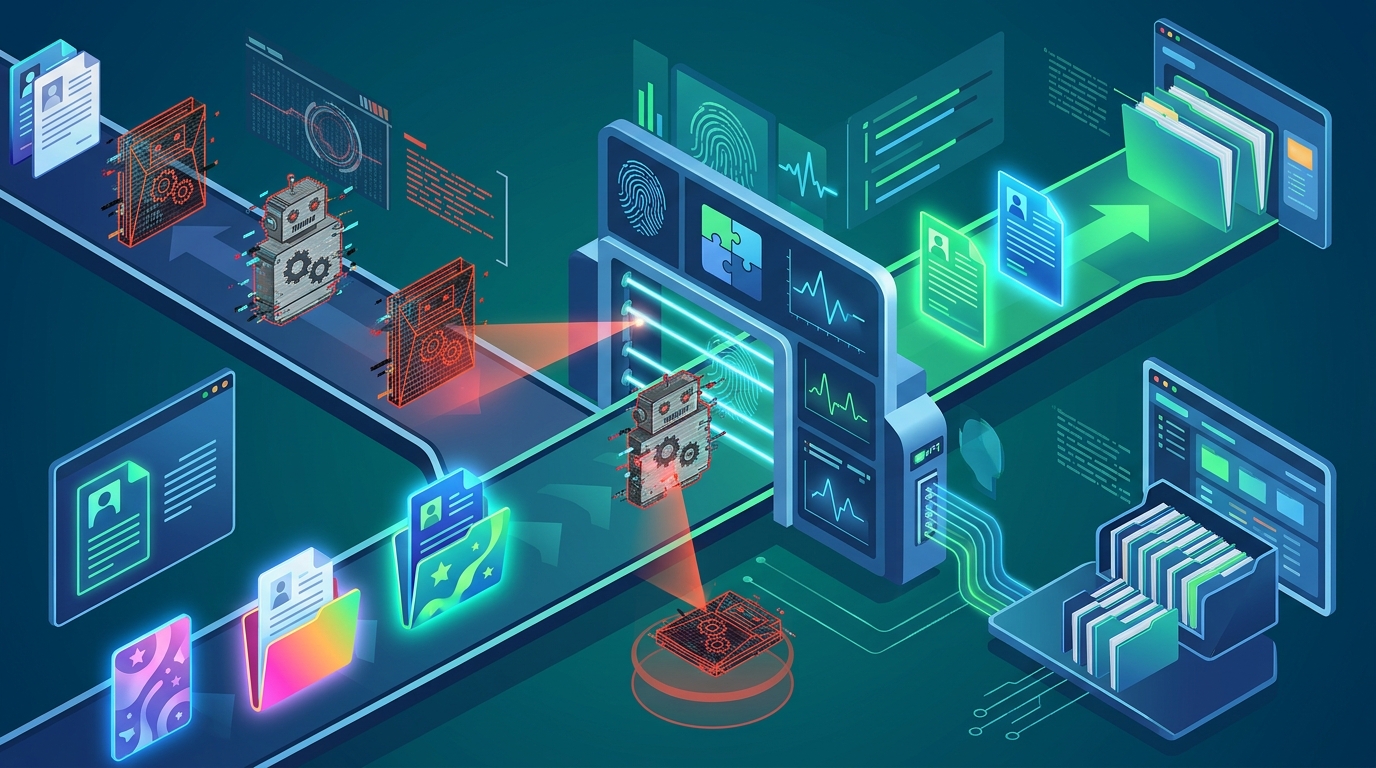
Employers can detect bots before candidates apply by implementing behavioral analytics, device fingerprinting, and interactive verification steps directly on the career site. These methods identify automated traffic patterns before a resume is submitted, reducing the volume of fake applications that clutter hiring pipelines. By shifting detection to the pre-apply stage, companies protect their data and improve the quality of the talent pool they review.
The Cost of Bot Traffic in Modern Recruiting
Bot traffic is a significant operational burden for modern HR teams. Automated scripts can submit thousands of applications in minutes, overwhelming applicant tracking systems (ATS) and masking genuine candidates. This flood of low-quality data forces recruiters to spend hours filtering out invalid entries. The result is a slower time-to-hire and a degraded candidate experience for real applicants who wait longer for responses.
Bot detection is the process of identifying and blocking automated software that mimics human user behavior to interact with digital platforms. In the context of recruiting, this involves analyzing user sessions for signs of automation, such as rapid mouse movements or missing browser fingerprints. When bots are allowed to proceed to the application stage, they consume server resources and skew hiring metrics. Early detection prevents these issues from compounding within the hiring workflow.
Match2 addresses this challenge by integrating a direct talent network that verifies candidate identity and intent before they engage with job postings. This approach ensures that the profiles reaching the employer are from real, connected individuals. By prioritizing verified human interaction, organizations can maintain a cleaner database of potential hires.
Behavioral Analytics and Device Fingerprinting
Traditional CAPTCHAs are often insufficient against sophisticated bots that can solve visual puzzles. Advanced detection relies on behavioral analytics, which tracks how a user interacts with a webpage. Metrics such as mouse trajectory, scroll speed, and click timing provide a unique signature for each session. Humans exhibit natural variability in these actions, while bots often follow predictable, linear paths.
Device fingerprinting is a technique that creates a unique identifier for a user's browser and hardware configuration. This identifier remains consistent across sessions, allowing platforms to recognize returning users and flag new devices that exhibit suspicious behavior. By combining behavioral data with device fingerprints, employers can build a risk score for each visitor. High-risk scores can trigger additional verification steps or block access entirely.
For example, a visitor who loads a job page and submits an application in under five seconds without any mouse movement is a strong indicator of bot activity. Implementing these analytics requires a lightweight script that does not significantly impact page load times. This balance between security and user experience is critical for maintaining high conversion rates from genuine candidates.
Interactive Verification Before Application
Passive monitoring is not always enough to stop determined bots. Employers should implement interactive verification steps that require active human engagement before the application form is revealed. This can include simple questions that verify understanding of the job description or interactive elements that test cognitive response times. These steps are designed to be frictionless for humans but difficult for automated scripts to navigate.
Interactive and inclusive apply processes can serve a dual purpose. They improve accessibility for candidates with disabilities while simultaneously acting as a barrier to bots. By requiring specific interactions, such as selecting relevant skills or confirming availability, the platform ensures that the user is genuinely interested in the role. This pre-qualification step filters out mass-appliers who are not serious about the position.
Building a Private Direct Talent Network
One of the most effective ways to reduce bot traffic is to shift from open, public job boards to a private direct talent network. In a closed network, candidates must create a verified profile to access job opportunities. This verification process, which may include email confirmation or social media linking, establishes a baseline of trust. Bots are less likely to invest in creating and maintaining a persistent profile if they cannot easily access the jobs.
A direct talent network is a private platform where employers connect with candidates who have opted in to be contacted about opportunities. Unlike public job boards, these networks allow for two-way communication and real-time updates on candidate status. This connectivity means that employers can reach out to passive candidates directly, bypassing the need for them to submit new applications. The network effect creates a community of verified professionals, making it harder for bots to infiltrate.
By building their own direct talent network, employers gain control over their candidate pipeline. They can update job postings and receive real-time data on candidate interest without relying on third-party job boards that are prone to bot spam. This approach aligns with the mission of Match2 to revolutionize talent acquisition by connecting exceptional talent with innovative companies through a trusted, verified ecosystem.
Integrating Detection with Existing Hiring Stacks
Implementing bot detection does not require replacing an existing ATS. Most modern detection tools integrate via lightweight scripts that work alongside current career site technologies. This integration allows employers to maintain their existing workflows while adding a layer of security. The key is to ensure that the detection layer communicates effectively with the ATS, flagging suspicious applications for review or automatic rejection.
Employers should evaluate their current recruiting stack for vulnerabilities. If the career site only allows keyword-based job search, it may be more susceptible to bot scraping. Adding profile upload and matching capabilities can help mitigate this risk. By requiring candidates to upload a profile, the platform can verify the authenticity of the data before it enters the ATS. This pre-apply verification is a critical step in modernizing recruiting workflows.
Match2 can be added to any career site to provide these advanced detection and matching capabilities. The platform is designed to be affordable and easy to implement, allowing employers to upgrade their recruiting strategy without extensive development work. By leveraging these tools, companies can protect their hiring process and ensure that they are spending their time on real candidates.
Key Takeaways
- Bot detection is the process of identifying automated software that mimics human behavior to submit fake applications.
- Behavioral analytics and device fingerprinting are essential for identifying bot traffic before it reaches the application stage.
- Interactive verification steps, such as skill selection or cognitive tests, can deter bots while improving candidate experience.
- Building a private direct talent network creates a verified community of candidates, reducing the risk of bot infiltration.
- Integrating detection tools with existing ATS systems allows for seamless security without disrupting current workflows.
- Match2 provides a universal candidate profile and direct talent network that helps employers connect with verified, real candidates.
Frequently Asked Questions
How does Match2 help minimize unqualified applicants on my career site?
Match2 uses AI talent matching and interactive apply processes to verify candidate intent and qualifications before they submit a full application. This pre-qualification step ensures that only serious, relevant candidates proceed to the next stage of the hiring process.
Is Match2 compliant with privacy laws?
Yes, Match2 is committed to protecting user privacy and complies with relevant privacy laws. The platform collects and uses data in accordance with its Privacy Policy, ensuring that candidate information is handled securely and ethically.
Can I use Match2 with my current recruiting stack?
Yes, Match2 is designed to integrate with existing hiring platforms and ATS systems. It adds a layer of connectivity and matching that works alongside your current tools, enhancing your recruiting workflow without requiring a complete overhaul.
What is a direct talent network?
A direct talent network is a private platform where employers connect with candidates who have created verified profiles. It allows for two-way communication and real-time updates, creating a trusted ecosystem for talent acquisition.
How does the matching work in Match2?
Match2 uses AI to match candidate profiles with job requirements. It analyzes skills, experience, and preferences to identify the best-fit candidates for each role, ensuring that employers are connected with the most relevant talent.
Conclusion
Detecting bots before candidates apply is a critical step in modernizing your recruiting strategy. By implementing behavioral analytics, interactive verification, and a private direct talent network, employers can protect their hiring pipeline and ensure they are connecting with real, qualified candidates. Match2 provides the tools and infrastructure to build this trusted ecosystem, helping you revolutionize talent acquisition and connect with exceptional talent. To see how Match2 can elevate your recruiting strategy, take our recruiting strategy assessment. Learn more: Match2 Connected Candidate Recruiting.