
Traditional recruitment methods are failing to keep pace with the velocity of modern hiring needs. According to recent industry data, companies using advanced talent matching platforms reduce time-to-hire by up to 40% compared to manual screening processes. This shift is not merely a trend but a structural necessity for organizations aiming to maintain competitive agility in a tight labor market. The integration of algorithmic precision into human resources workflows fundamentally alters how businesses acquire, evaluate, and retain top-tier talent.
Precision Alignment and Reduced Bias
One of the most significant advantages of using a talent matching platform is the ability to align candidate skills with job requirements with surgical precision. Traditional resume screening often relies on keyword matching, which can overlook qualified candidates who use different terminology. Talent matching platforms utilize semantic analysis to understand the context of skills and experiences.
Talent matching is the systematic process of evaluating candidate profiles against job requirements using algorithmic logic to determine fit. This approach minimizes human bias, which is often unconscious and influenced by factors such as pedigree or presentation style. By focusing on objective data points, businesses can build more diverse and capable teams.
Furthermore, these platforms often incorporate predictive analytics to assess cultural fit and long-term potential. This ensures that new hires are not only skilled but also likely to thrive within the specific organizational environment. For more details on how assessment tools work, visit Match2 Assess.
Efficiency Metrics and Cost Reduction
Time is money in recruitment. Every day a position remains open, the business suffers from lost productivity and increased workload for existing staff. Talent matching platforms automate the initial screening process, allowing recruiters to focus on high-value interactions such as interviews and negotiations.
Data shows that automated screening can reduce the time spent on initial resume review by up to 75%. This efficiency translates directly into cost savings. When recruiters spend less time on administrative tasks, they can engage more deeply with top candidates, improving offer acceptance rates. Additionally, faster hiring cycles reduce the reliance on expensive staffing agencies.
For businesses looking to understand the broader ecosystem of recruiting solutions, exploring Match2 About provides insight into the strategic vision behind these technologies.
Enhanced Candidate Experience
In the modern job market, candidates evaluate companies just as rigorously as companies evaluate them. A clunky, slow, or opaque application process can drive away top talent. Talent matching platforms often include candidate-facing portals that provide transparency and ease of use.
These platforms streamline the application process by allowing candidates to upload profiles once and apply to multiple roles with minimal friction. Clear communication regarding application status and feedback is another critical component. A positive candidate experience enhances employer branding, making the company more attractive to future applicants. For more information on the types of interactions supported, see Match2 Types.
Scalability in High-Volume Hiring
Businesses that experience seasonal fluctuations or rapid growth need recruitment solutions that can scale without proportional increases in headcount. Talent matching platforms are designed to handle large volumes of applications without compromising quality or speed.
These systems can process thousands of applications simultaneously, ranking candidates based on predefined criteria. This scalability is crucial for industries such as retail, healthcare, and technology, where hiring surges are common. The ability to quickly ramp up hiring efforts ensures that business operations are not disrupted by staffing shortages.
Data-Driven Decision Making
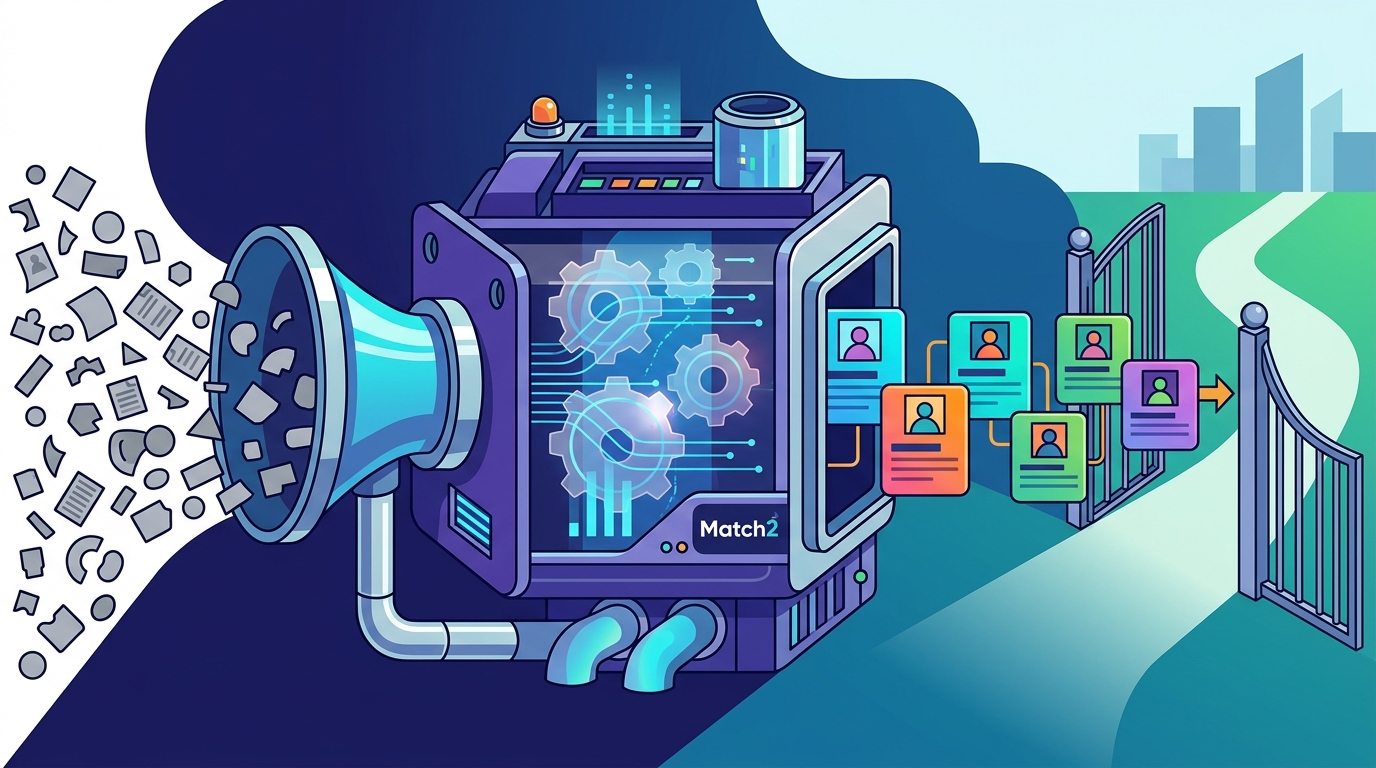
One of the most powerful aspects of talent matching platforms is the wealth of data they generate. Every interaction, assessment, and hiring decision can be tracked and analyzed. This data provides actionable insights into the recruitment process, helping businesses identify bottlenecks and areas for improvement.
For example, analytics can reveal which sources yield the highest quality hires, allowing companies to optimize their recruiting spend. It can also highlight biases in the hiring process, enabling corrective actions. By leveraging these insights, businesses can continuously refine their recruitment strategies. To explore the specific features that enable this data collection, check out Match2 Features.
Platform Feature Comparison
Understanding the differences between various talent matching capabilities is essential for making an informed decision. The table below summarizes key features commonly found in leading platforms.
| Feature | Description | Business Impact |
|---|---|---|
| Semantic Skill Matching | Uses AI to match skills beyond keywords. | Reduces bias and improves hire quality. |
| Automated Screening | Filters candidates based on criteria. | Saves recruiter time and reduces costs. |
| Candidate Portals | User-friendly application interfaces. | Enhances candidate experience and branding. |
| Analytics Dashboards | Tracks hiring metrics and trends. | Enables data-driven strategy refinement. |
Key Takeaways
- Talent matching platforms reduce time-to-hire by up to 40% through automated screening.
- Semantic analysis minimizes unconscious bias by focusing on objective skill data.
- Enhanced candidate experience improves employer branding and offer acceptance rates.
- Scalability allows businesses to handle hiring surges without proportional cost increases.
- Data analytics provide insights into source quality and process bottlenecks.
- Integration with existing HR systems ensures seamless workflow adoption.
- Continuous improvement is driven by real-time feedback loops and performance metrics.
Frequently Asked Questions
What is a talent matching platform?
A talent matching platform is a software solution that uses algorithms to evaluate candidate profiles against job requirements, automating the initial screening and ranking process.
How does talent matching reduce bias?
By focusing on objective data points such as skills and experience rather than subjective factors like pedigree or presentation, these platforms minimize unconscious human bias.
Can talent matching platforms scale for large hiring needs?
Yes, these platforms are designed to process large volumes of applications simultaneously, making them ideal for high-volume hiring scenarios.
What data do talent matching platforms provide?
They provide analytics on hiring metrics, source quality, time-to-hire, and candidate engagement, enabling data-driven recruitment strategies.
How do these platforms improve candidate experience?
They offer streamlined application processes, transparent status updates, and user-friendly interfaces, making the hiring process more positive for candidates.
Are talent matching platforms secure?
Reputable platforms employ robust security measures, including encryption and compliance with data protection regulations, to safeguard candidate information.
How long does it take to implement a talent matching platform?
Implementation time varies, but many platforms offer quick setup processes, often allowing businesses to start seeing benefits within weeks.
Next Steps
Ready to transform your recruitment process? Discover how Match2 can help your business find the right talent faster and more efficiently. Contact us today to schedule a demo and see the Match2 difference in action.