
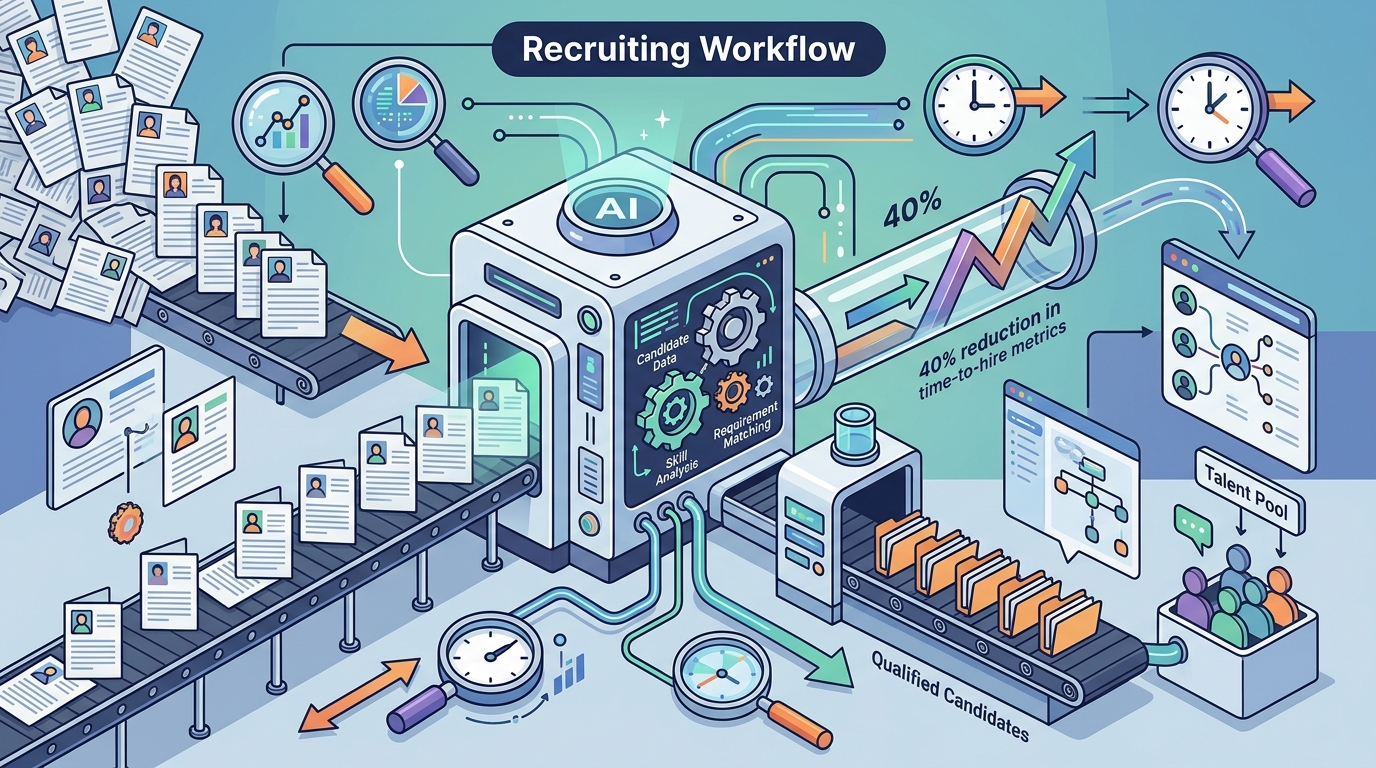
The recruitment landscape is undergoing a seismic shift driven by artificial intelligence. According to recent industry data, organizations that effectively integrate AI into their hiring processes report a 40% reduction in time-to-hire metrics compared to traditional methods. This statistic highlights not just efficiency, but a fundamental change in how talent is sourced, evaluated, and engaged. As the volume of applications continues to outpace human capacity, leveraging technology is no longer optional. It is a critical operational necessity for maintaining competitive advantage in talent acquisition.
Defining AI in Modern Recruiting
To implement AI effectively, we must first establish clear definitions. AI in recruiting is the application of machine learning algorithms and natural language processing to automate and optimize talent acquisition tasks. This includes everything from resume parsing to interview scheduling and predictive analytics for candidate success.
Another critical definition is necessary for understanding the scope. Machine learning is a subset of AI that enables systems to improve their performance on a specific task through experience without being explicitly programmed. In recruiting, this means the system learns which candidates are most likely to succeed based on historical hiring data.
Finally, understanding the output is vital. Predictive analytics is the practice of using historical data and statistical algorithms to identify the likelihood of future outcomes. When applied to recruiting, it helps predict which candidates will stay longer, perform better, and fit the company culture.
For a deeper understanding of how these technologies converge, explore the assessment capabilities that form the backbone of modern data-driven hiring.
Strategic Integration of AI Tools
Implementing AI is not about replacing existing systems but enhancing them. The first best practice is to audit your current tech stack. Identify bottlenecks where human intervention is repetitive and low-value. Common areas include initial resume screening, scheduling coordination, and initial candidate outreach.
Start with high-impact, low-complexity integrations. Automated scheduling tools can save recruiters hours every week. However, the real power lies in connected candidate solutions. Match2 features demonstrate how connecting disparate data points creates a holistic view of a candidate's potential.
Ensure that your AI tools integrate seamlessly with your Applicant Tracking System (ATS). Siloed data leads to fragmented insights. A unified platform allows for real-time updates and consistent candidate tracking across the entire hiring funnel.
The Role of Data Quality and Bias Mitigation
AI is only as good as the data it is fed. Garbage in, garbage out is a fundamental rule in machine learning. If your historical hiring data contains biases, your AI will learn and amplify those biases. This is a critical risk that organizations must actively manage.
Best practice number one is data cleansing. Regularly audit your historical data for demographic imbalances and inconsistent formatting. Remove outdated job descriptions and irrelevant criteria that may skew results.
Best practice number two is bias mitigation. Implement algorithms that are specifically designed to ignore protected characteristics such as age, gender, and ethnicity. Focus on skills, competencies, and potential rather than pedigree or background.
According to a 2024 study on algorithmic fairness, companies that actively audit their AI models for bias see a 25% increase in diverse candidate slates. This data shows that ethical AI is not just a moral imperative but a business advantage.
Maintaining the Human Element
AI should augment human decision-making, not replace it entirely. The "human in the loop" approach ensures that final hiring decisions are made by people who can assess nuance, cultural fit, and soft skills that algorithms often miss.
Use AI for filtering and ranking, but let recruiters conduct the final interviews. This hybrid approach leverages the speed of AI while preserving the empathy and judgment of human recruiters.
Training your recruiting team is essential. They must understand how the AI tools work, their limitations, and how to interpret the data provided. Read our latest insights on building a tech-savvy recruiting team.
Enhancing Candidate Experience
AI can significantly improve the candidate experience by providing faster feedback and more personalized interactions. Candidates expect a smooth, responsive hiring process. Delays and lack of communication are the primary reasons candidates withdraw from applications.
Implement chatbots for initial engagement. These tools can answer common questions, schedule interviews, and provide status updates 24/7. This immediacy signals to candidates that the organization values their time.
Personalization is key. Use AI to tailor job recommendations and communication based on candidate preferences and history. Generic mass emails are ineffective. Targeted, relevant communication increases engagement rates.
Research indicates that 70% of candidates are more likely to apply to companies that offer a seamless digital application process. This ranking highlights the importance of user-friendly AI interfaces.
Compliance and Ethical Considerations
As AI becomes more prevalent in hiring, regulatory scrutiny is increasing. Organizations must ensure their AI practices comply with local, state, and federal laws. This includes regulations regarding data privacy, algorithmic transparency, and non-discrimination.
Document your AI processes. Maintain records of how decisions are made, what data is used, and how bias is mitigated. This documentation is crucial for audits and legal defense.
Be transparent with candidates. Inform them when AI is being used in the hiring process and explain how their data will be used. Transparency builds trust and reduces legal risk.
For detailed guidance on navigating these complexities, review our frequently asked questions regarding compliance and data security.
Key Takeaways
- Data Quality is Paramount: Clean, unbiased historical data is the foundation of effective AI recruiting.
- Human Oversight is Essential: AI should augment, not replace, human judgment in final hiring decisions.
- Bias Mitigation is Critical: Regular audits of AI models are necessary to prevent discriminatory outcomes.
- Candidate Experience Matters: Fast, personalized interactions driven by AI improve candidate engagement and brand perception.
- Compliance is Non-Negotiable: Adhering to legal standards protects the organization from liability and reputational damage.
- Integration is Key: Seamless connection between AI tools and existing ATS platforms maximizes efficiency.
- Continuous Learning: Regularly update AI models and train staff to keep pace with technological advancements.
Frequently Asked Questions
How does AI reduce bias in hiring?
AI can reduce bias by focusing on skills and competencies rather than demographic information. By anonymizing data and using standardized assessment criteria, AI helps create a more level playing field for all candidates.
What is the role of machine learning in recruiting?
Machine learning allows recruiting systems to learn from past hiring successes and failures. It identifies patterns in candidate data that correlate with job performance, helping to predict future hires more accurately.
Can AI replace human recruiters?
No, AI cannot fully replace human recruiters. While it excels at data processing and pattern recognition, it lacks the empathy, intuition, and cultural assessment capabilities of humans. The best results come from a collaborative approach.
How do I ensure my AI recruiting tools are compliant?
Ensure compliance by regularly auditing your AI models for bias, maintaining transparent documentation of processes, and staying informed about relevant laws and regulations. Consult with legal experts specializing in employment law.
What are the benefits of using AI for candidate engagement?
AI enables personalized, timely communication with candidates. Chatbots can provide instant responses, and automated workflows ensure no candidate falls through the cracks, leading to a better candidate experience.
How important is data quality for AI recruiting?
Data quality is the most critical factor. Poor quality data leads to inaccurate predictions and biased outcomes. Regular data cleansing and validation are essential for maintaining the effectiveness of AI systems.
What is the future of AI in recruiting?
The future of AI in recruiting involves more advanced predictive analytics, deeper integration with HR systems, and greater emphasis on ethical AI practices. As technology evolves, so too will its applications in talent acquisition.
Next Steps for Your Organization
Implementing AI in your recruiting workflow is a journey, not a destination. Start by assessing your current processes, identifying areas for improvement, and selecting the right tools to support your goals. Explore our assessment solutions to see how connected candidate data can transform your hiring strategy.
Ready to modernize your recruiting? Contact us today to schedule a demo and discover how Match2 can help you build a more efficient, fair, and effective hiring process.