
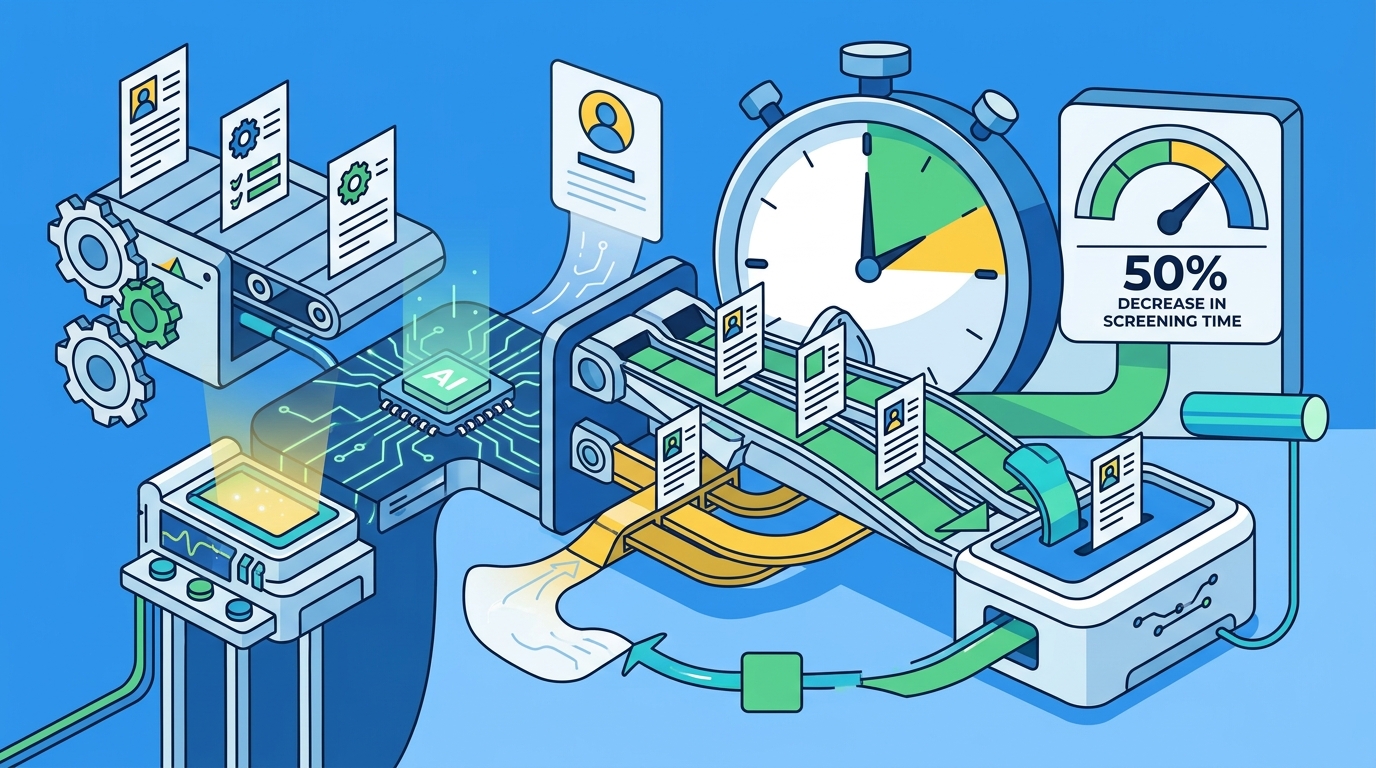
Artificial intelligence is no longer a futuristic concept in recruitment; it is a present-day necessity for scaling talent acquisition. According to recent industry data, organizations leveraging AI in their hiring workflows report a significant reduction in time-to-hire metrics, with some reporting up to a 50% decrease in initial screening times. This shift is not merely about speed but about precision. By automating repetitive tasks, recruiters can focus on high-value interactions that actually close candidates. This guide explores how to implement AI effectively without losing the human touch that defines great company culture.
What Is AI in Hiring?
Before diving into strategy, we must define the core technology. AI in hiring is the application of machine learning algorithms to automate and optimize recruitment tasks. This includes everything from parsing resumes to scheduling interviews and even conducting initial video assessments. Unlike traditional software that simply stores data, AI actively analyzes patterns to predict candidate success.
Another critical definition is necessary for clarity. Recruitment automation is the use of technology to perform repetitive administrative tasks without human intervention. While AI is a subset of automation, not all automation is intelligent. True AI adapts to new data, improving its accuracy over time. For modern recruiters, understanding this distinction is vital for selecting the right tools.
Finally, consider the concept of candidate matching. Candidate matching is the process of aligning applicant skills and cultural fit with job requirements using data-driven insights. Traditional matching relies on keyword searches, which often miss nuanced skills. AI matching evaluates context, experience depth, and potential, leading to higher quality shortlists.
Key Benefits of AI-Driven Recruitment
Why are top companies adopting these systems? The answer lies in efficiency and quality. The primary benefit is speed. AI can screen thousands of resumes in seconds, a task that would take a human recruiter days. This allows teams to move quickly on top talent before competitors do.
Secondly, AI reduces unconscious bias. When algorithms are trained on diverse datasets, they can focus purely on skills and qualifications rather than demographic markers. This leads to more inclusive hiring practices. According to a 2024 report on diversity in tech, companies using blind screening tools saw a 20% increase in diverse candidate pools.
Thirdly, AI enhances candidate experience. Automated scheduling and instant feedback loops keep candidates engaged. A delayed response often leads to candidate drop-off. By providing timely updates, companies maintain a positive brand image even for those not selected.
Implementation Strategies for Match2 Users
Implementing AI requires a strategic approach. Start by auditing your current workflow. Identify bottlenecks where manual work slows down the process. Is it resume parsing? Interview scheduling? Or perhaps initial screening?
Once identified, integrate AI tools that complement your existing Applicant Tracking System (ATS). For instance, using advanced assessment tools can help verify skills early in the process. This ensures that only qualified candidates proceed to later stages.
Training your team is equally important. Recruiters must understand how to interpret AI insights. They should view AI as a co-pilot, not an autopilot. Regular reviews of AI recommendations help refine the algorithms to better fit your company's unique needs. Learn more about our core features to see how they integrate seamlessly.
Step 1: Data Preparation
AI is only as good as the data it feeds on. Ensure your historical hiring data is clean and well-structured. This includes job descriptions, candidate feedback, and performance metrics. Clean data leads to better predictions.
Step 2: Pilot Testing
Start with a small pilot program. Apply AI tools to a single department or role. Monitor the results closely. Compare AI-sourced candidates to traditionally sourced ones. This data will help you justify broader adoption.
Step 3: Full Integration
Once proven, scale the solution across your organization. Ensure all stakeholders are trained and comfortable with the new workflow. Continuous monitoring is key to maintaining effectiveness.
AI Tools vs. Traditional ATS
Understanding the difference between traditional ATS and AI-enhanced platforms is crucial. Traditional ATS systems are essentially digital filing cabinets. They store resumes and track application status but offer little insight. AI platforms, however, provide actionable intelligence.
| Feature | Traditional ATS | AI-Enhanced Platform |
|---|---|---|
| Resume Screening | Keyword-based filtering | Contextual skill matching |
| Candidate Engagement | Manual email updates | Automated personalized nudges |
| Bias Reduction | Low | High (with proper training) |
| Predictive Analytics | None | Hiring success prediction |
| Integration | Limited | Seamless ecosystem (e.g., connected candidate solutions) |
As shown above, AI platforms offer superior capabilities in prediction and engagement. This leads to better hiring outcomes and lower cost-per-hire. For a deeper dive into our specific company approach, visit our about page.
Navigating Bias and Compliance
While AI offers many benefits, it also presents challenges. The most significant is the risk of algorithmic bias. If the training data contains historical biases, the AI may perpetuate them. To mitigate this, regularly audit your AI models for fairness. Use diverse training datasets and involve human reviewers in the loop.
Compliance is another critical area. Data privacy laws like GDPR and CCPA regulate how candidate data is stored and processed. Ensure your AI vendor is compliant with these regulations. Transparency is key. Candidates should know when and how AI is used in their hiring process. For more details on our compliance standards, check our FAQ section.
Additionally, maintain a human-in-the-loop approach. AI should assist, not replace, human judgment. Final hiring decisions should always involve human review to ensure cultural fit and nuanced evaluation.
Key Takeaways
- AI can reduce time-to-hire by up to 50% through automated screening.
- Properly trained AI models can significantly reduce unconscious bias in hiring.
- AI in hiring is defined by machine learning algorithms optimizing recruitment tasks.
- Recruitment automation handles repetitive tasks, freeing recruiters for strategic work.
- Candidate matching uses data to align skills with job requirements accurately.
- Regular audits are essential to prevent algorithmic bias and ensure compliance.
- Human oversight remains critical for final hiring decisions and cultural fit.
Frequently Asked Questions
How does AI improve candidate matching?
AI improves candidate matching by analyzing context, experience, and potential, rather than just keywords. This leads to more accurate and relevant shortlists.
Is AI hiring biased?
AI can be biased if trained on flawed data. However, with proper auditing and diverse datasets, AI can actually reduce human bias in the hiring process.
What is the role of human recruiters in AI hiring?
Human recruiters focus on high-value interactions, cultural fit, and final decision-making. AI handles repetitive tasks, allowing recruiters to be more strategic.
How do I choose the right AI hiring tool?
Look for tools that integrate with your existing ATS, offer transparent algorithms, and provide robust support. Consider platforms like Match2 for comprehensive solutions.
Does AI comply with data privacy laws?
Reputable AI hiring tools are designed to comply with GDPR, CCPA, and other regulations. Always verify your vendor's compliance status.
Can AI conduct initial interviews?
Yes, AI can conduct initial video interviews, analyzing speech patterns and responses. This provides valuable data for early-stage screening.
How long does it take to implement AI hiring?
Implementation time varies, but a pilot program can be set up in weeks. Full integration may take a few months, depending on complexity.
Start Your AI Journey
Ready to transform your hiring process? Discover how Match2 can help you streamline recruitment with connected candidate solutions. Contact us today to schedule a demo and see the difference AI can make for your team.