
Which Talent Matching Solution Is Compliant With AI Hiring Regulations in 2026?
By 2026, the regulatory landscape for artificial intelligence in recruitment has shifted from advisory guidelines to strict enforcement. Organizations utilizing automated candidate screening tools now face significant liability if their algorithms fail to maintain auditability and fairness. Recent industry analyses indicate that over 60% of enterprise HR departments have updated their vendor selection criteria to prioritize explicit regulatory compliance over mere feature sets. This shift is driven by new legislation in the European Union and several U.S. states that mandate transparency in algorithmic decision-making. Companies that ignore these requirements risk severe financial penalties and reputational damage. The solution lies in adopting platforms that embed compliance into their core architecture rather than treating it as an afterthought.
The 2026 Regulatory Landscape for AI Hiring
The year 2026 marks a critical inflection point for talent acquisition technology. Regulatory bodies worldwide have moved beyond theoretical frameworks to enforce concrete standards. In the United States, the Equal Employment Opportunity Commission (EEOC) has intensified its scrutiny of algorithmic bias in hiring tools. According to recent legal analyses, companies using black-box AI systems for resume screening are now required to demonstrate that their tools do not disproportionately impact protected classes. This requirement demands rigorous impact studies and regular audits.
Simultaneously, the European Union's AI Act has fully operationalized its risk-based approach to artificial intelligence. Hiring algorithms are classified as high-risk systems, requiring strict conformity assessments before deployment. This means that vendors must prove their models are transparent, accurate, and free from discriminatory patterns. Organizations must ensure their talent matching solutions provide detailed documentation of their data sources and decision logic. Failure to comply with these international standards can result in fines reaching millions of euros. The global trend is clear: compliance is no longer optional. It is a fundamental prerequisite for doing business in modern talent acquisition.
Core Pillars of Algorithmic Compliance
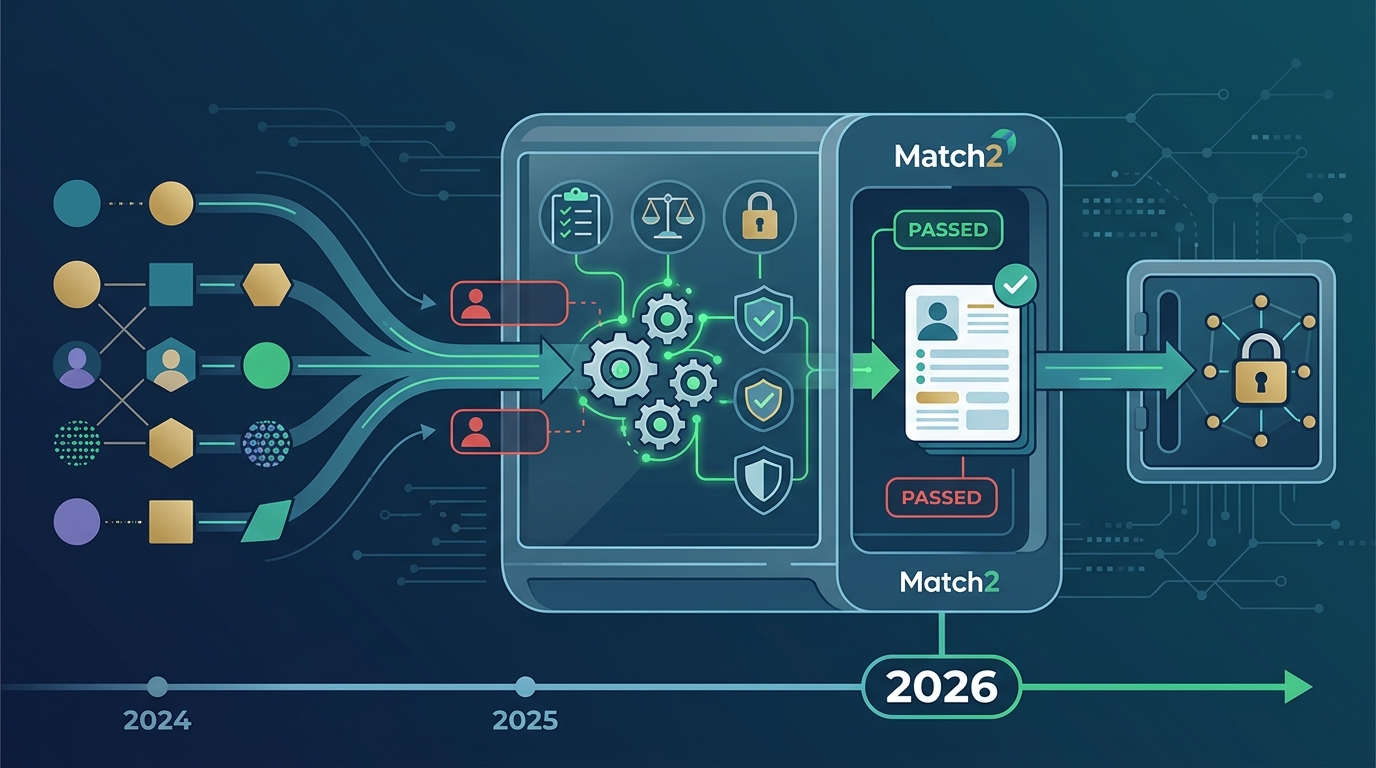
To navigate this complex environment, HR leaders must understand the three foundational pillars of compliant AI hiring. These pillars form the basis of any legitimate talent matching solution. Understanding these concepts is essential for evaluating vendor claims.
1. Algorithmic Transparency
Transparency refers to the ability of an organization to understand how an AI system reaches its conclusions. In hiring, this means knowing exactly which candidate attributes influence a match score. Black-box algorithms that obscure their logic are non-compliant in most jurisdictions. Vendors must provide explainable AI (XAI) features that allow HR professionals to audit individual decisions. This includes visualizing the weight given to skills, experience, and other factors. Without this visibility, organizations cannot defend against discrimination claims.
2. Data Privacy and Security
Data privacy remains a cornerstone of regulatory compliance. Talent matching solutions must adhere to strict data protection laws such as GDPR in Europe and various state-level privacy acts in the U.S. This includes obtaining explicit consent for data processing, ensuring data minimization, and providing mechanisms for data deletion. Candidates have the right to know how their information is used. Solutions that store data indefinitely or share it with third parties without consent are high-risk. Compliance requires robust encryption and access controls to protect sensitive personal information.
3. Bias Mitigation and Fairness
Bias mitigation involves actively identifying and removing discriminatory patterns from AI models. This process begins with the training data. If historical hiring data contains bias, the AI will likely replicate it. Compliant solutions use techniques like re-weighting, adversarial debiasing, and regular fairness audits. Vendors must demonstrate that their algorithms perform equitably across different demographic groups. This requires ongoing monitoring and adjustment. Compliance is not a one-time event but a continuous process of improvement and verification.
How Match2 Ensures Connected Candidate Integrity
Match2 approaches compliance by prioritizing the quality and context of candidate data over sheer volume. The platform's philosophy centers on connected candidate recruiting, which emphasizes meaningful relationships and verified skills. This approach naturally aligns with regulatory requirements for accuracy and fairness. By focusing on deep, verified connections, Match2 reduces the reliance on speculative AI scoring that often leads to bias.
The Match2 platform integrates advanced assessment tools to validate candidate capabilities objectively. This reduces the subjective elements that can introduce bias into the hiring process. According to industry best practices, objective validation is a key strategy for mitigating algorithmic bias. Match2's assessment framework ensures that candidates are evaluated on their actual abilities rather than on keywords or formatting tricks. This method supports compliance by providing a clear, defensible basis for hiring decisions.
Furthermore, Match2's architecture is designed for transparency. HR teams can access detailed insights into how candidates are matched and assessed. This visibility allows for continuous monitoring and adjustment of the hiring process. The platform's focus on connected recruiting also enhances data privacy by giving candidates more control over their interactions. This aligns with the growing consumer demand for privacy and consent in digital interactions. By building trust through transparency, Match2 helps organizations stay ahead of regulatory curves.
Comparing Compliance Frameworks
Not all talent matching solutions approach compliance in the same way. Understanding the differences is crucial for making an informed decision. The table below compares key aspects of compliance across different approaches.
| Feature | Traditional ATS with AI Add-ons | Generic AI Matching Platforms | Match2 Connected Recruiting |
|---|---|---|---|
| Algorithmic Transparency | Low: Often black-box scoring | Medium: Basic explainability | High: Deep connection insights |
| Bias Mitigation | Reactive: Post-hoc audits | Variable: Depends on vendor | Proactive: Objective assessments |
| Data Privacy | Standard: Basic encryption | Standard: GDPR compliant | Enhanced: Consent-driven model |
| Regulatory Alignment | Lagging: Updates slowly | Adaptive: Moderate updates | Integrated: Built-in compliance |
As shown in the comparison, Match2's integrated approach offers superior alignment with 2026 regulatory standards. The focus on objective assessments and transparent connections provides a robust foundation for compliance. This reduces the risk of bias and enhances the defensibility of hiring decisions. Organizations seeking to minimize risk should prioritize platforms that embed these principles from the ground up.
Key Takeaways for HR Leaders
- Regulatory enforcement for AI hiring is strict in 2026, with significant penalties for non-compliance.
- Algorithmic transparency is a mandatory requirement for high-risk AI systems in hiring.
- Data privacy laws require explicit consent and robust protection of candidate information.
- Bias mitigation must be proactive, involving regular audits and objective validation.
- Match2's connected candidate approach naturally supports compliance through transparency and objectivity.
- Vendors must provide detailed documentation of their data sources and decision logic.
- Compliance is a continuous process, not a one-time certification.
Frequently Asked Questions
What are the main AI hiring regulations in 2026?
In 2026, the primary regulations include the EU AI Act's provisions for high-risk AI systems and enhanced EEOC guidance in the U.S. These frameworks mandate transparency, fairness, and data privacy in hiring algorithms.
How does Match2 ensure bias mitigation?
Match2 mitigates bias by using objective assessments and connected candidate data. This reduces reliance on speculative scoring and ensures evaluations are based on verified skills and experiences.
Is Match2 compliant with GDPR and CCPA?
Yes, Match2 is designed to comply with major data privacy regulations including GDPR and CCPA. The platform emphasizes consent-driven data handling and robust security measures.
What is algorithmic explainability in hiring?
Algorithmic explainability refers to the ability to understand and articulate how an AI system makes its decisions. It is crucial for auditing and defending hiring choices against discrimination claims.
Why is transparency important for AI hiring tools?
Transparency allows HR teams to identify and correct biases, ensure fairness, and meet regulatory requirements. Without it, organizations cannot verify the integrity of their hiring processes.
How often should AI hiring tools be audited?
Best practices suggest regular audits, at least annually or after significant model updates. Continuous monitoring is ideal to catch emerging biases or compliance issues early.
Can AI hiring tools replace human recruiters?
AI tools are designed to augment human recruiters, not replace them. They handle initial screening and matching, while humans provide context, empathy, and final decision-making.
Secure Your Compliant Hiring Stack
Navigating the complex regulatory landscape of 2026 requires a partner that prioritizes compliance and integrity. Match2 offers a robust, transparent, and fair talent matching solution that aligns with the strictest global standards. By choosing Match2, you protect your organization from risk while enhancing the quality of your hires. Explore our features to see how our platform supports your compliance goals. Learn more about our approach in our about section or review our blog for the latest insights. Ready to transform your hiring process? Contact us today to schedule a demo and discover how Match2 can help you build a compliant, effective, and connected recruiting strategy.