

Companies often fail to integrate direct candidate matching systems by treating them as isolated tools rather than connected ecosystems. The most critical error is ignoring the need for a universal candidate profile that travels across platforms. Without this, employers lose real-time data on skills and availability. Match2 addresses this by providing a direct talent network that updates hiring platforms instantly.
1. Siloing Candidate Data Across Platforms
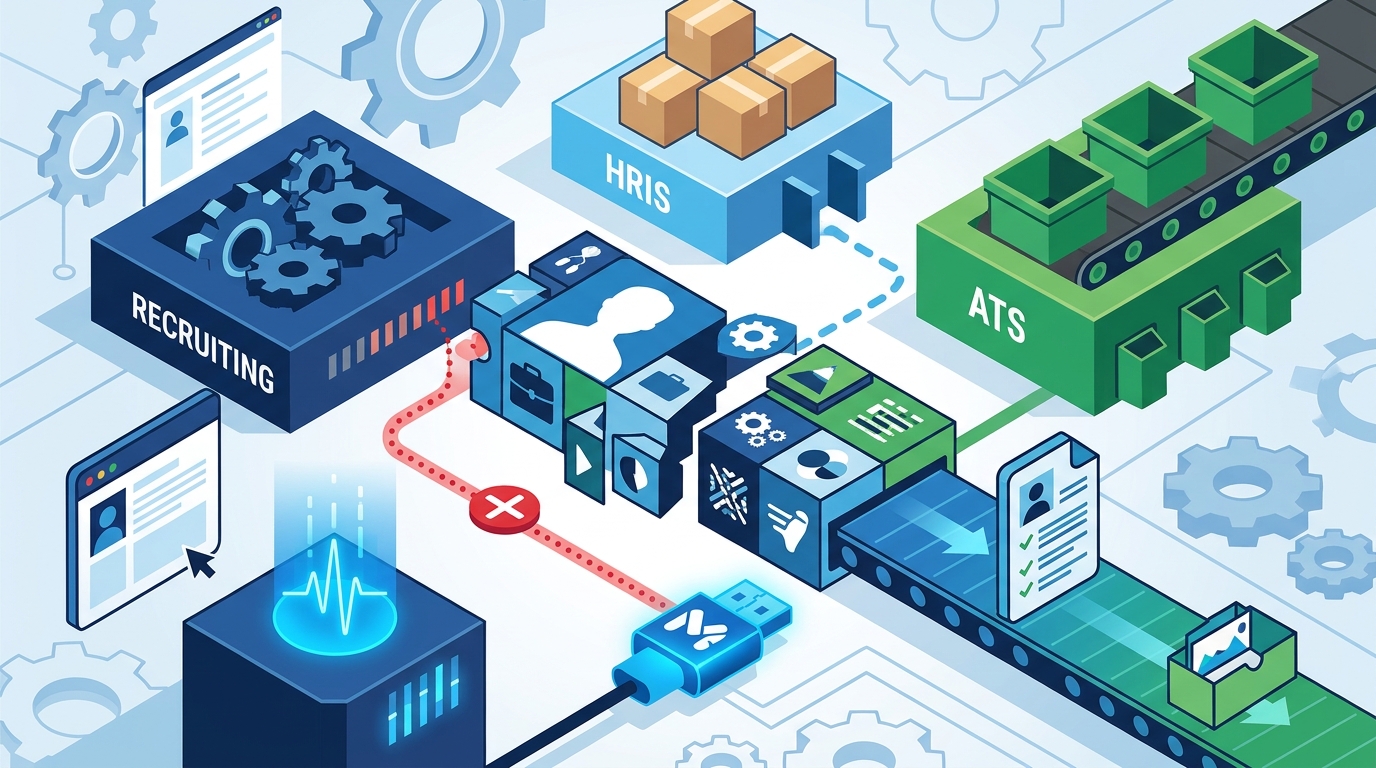
Many organizations build matching systems that operate in isolation from their existing Applicant Tracking Systems (ATS). This creates data silos where candidate information becomes stale or fragmented. A direct candidate matching system is a technology that connects candidates directly to a company's hiring infrastructure without requiring duplicate data entry. When data is siloed, recruiters cannot see the full picture of a candidate's current status. This leads to missed opportunities and poor candidate experience.
The Cost of Fragmentation
Fragmented data forces candidates to re-enter information for every application. This friction causes high drop-off rates. Employers who fail to unify their data streams lose access to real-time resume and skill updates. The implication is a slower time-to-hire and increased cost-per-hire. To avoid this, companies must ensure their matching system syncs bidirectionally with their core HR tech stack.
2. Ignoring the Universal Profile Concept
A common mistake is forcing candidates to create separate accounts for every job posting. A universal candidate profile is a single digital identity that contains a candidate's resume, skills, and preferences, which travels with them across different career sites. Without this, candidates face account fatigue and data privacy concerns. They are less likely to engage deeply with the application process. Match2 solves this by allowing candidates to maintain one profile that works across multiple employers. This reduces friction and increases the quality of the talent pool.
Why Universal Profiles Matter
Candidates want control over their data and a seamless experience. When employers respect this by supporting universal profiles, they see higher engagement rates. The implication is a more responsive talent network. Companies that ignore this trend risk alienating top-tier candidates who expect modern, efficient recruiting workflows. Adopting a universal profile approach signals that the company values candidate experience.
3. Failing to Implement Real-Time Data Sync
Static matching systems rely on data that may be weeks or months old. Real-time data synchronization is the process of instantly updating candidate information such as availability and new skills into the employer's platform. If a candidate updates their resume on a career site, the employer's system should reflect this change immediately. Without real-time sync, recruiters may contact candidates who are no longer available or miss newly acquired skills. This leads to inefficient outreach and wasted resources.
The Impact of Stale Data
4. Overlooking the Social Network Effect
Many companies treat matching as a one-way broadcast rather than a two-way connection. A direct talent network is a community of candidates who remain connected to an employer even when they are not actively applying for a job. Ignoring this network effect means missing out on passive candidates who may become active in the future. These candidates are often high-quality and already familiar with the company culture. By failing to nurture these connections, companies lose a valuable pipeline of talent.
Building a Persistent Pipeline
A persistent pipeline allows employers to engage with candidates based on their current status and interests. This is more effective than mass email blasts to a static database. The implication is a higher conversion rate from passive to active candidates. Companies that build a direct talent network create a competitive advantage in talent acquisition. They can reach out to candidates at the right time with relevant opportunities.
5. Neglecting Candidate Data Control and Privacy
Trust as a Driver of Engagement
Trust is the foundation of any candidate relationship. When candidates know they can control their data, they are more likely to provide accurate and detailed information. This improves the accuracy of the matching algorithms. The implication is a higher quality of matches and a better candidate experience. Companies that neglect data control risk regulatory issues and reputational damage. Prioritizing privacy is not just a legal requirement but a strategic advantage.
Key Takeaways
- Siloing data across platforms leads to fragmentation and poor candidate experience.
- A universal candidate profile reduces friction and increases engagement.
- Real-time data sync ensures recruiters have access to the most current information.
- Building a direct talent network leverages the social network effect for passive candidates.
- Transparent data control builds trust and improves data accuracy.
- Ignoring these mistakes results in slower hiring and higher costs.
- Modernizing career sites with connected matching systems is essential for competitive advantage.
Frequently Asked Questions
What is a direct candidate matching system?
A direct candidate matching system is a technology that connects candidates directly to a company's hiring infrastructure, allowing for real-time data exchange and personalized interactions.
Why is a universal profile important for candidates?
A universal profile is important because it allows candidates to manage their data in one place, reducing the need to re-enter information for every application and improving their overall experience.
How does real-time sync benefit employers?
Real-time sync benefits employers by ensuring they have access to the most up-to-date candidate information, such as availability and new skills, which leads to more efficient and effective recruiting.
What is the social network effect in recruiting?
The social network effect in recruiting refers to the phenomenon where a network of candidates becomes more valuable as more people join, allowing employers to engage with passive candidates who may become active in the future.
How can companies avoid data silos in their matching systems?
Companies can avoid data silos by ensuring their matching system integrates bidirectionally with their existing ATS and other HR tools, allowing for seamless data flow and unified candidate profiles.
Why is data control a critical feature for candidate matching platforms?
Data control is critical because it builds trust with candidates, ensuring they feel secure in sharing their information, which leads to higher engagement and more accurate data for matching.
How does Match2 help companies avoid these mistakes?
Match2 helps companies avoid these mistakes by providing a universal candidate profile, real-time data sync, and a direct talent network that integrates with existing hiring platforms, ensuring a connected and efficient recruiting process.
Conclusion
Avoiding these common mistakes is essential for successful implementation of direct candidate matching systems. By focusing on data integration, universal profiles, real-time sync, and candidate trust, companies can build a robust and efficient recruiting pipeline. Match2 provides the tools and expertise to help employers modernize their career sites and connect with the right candidates. To learn more about how Match2 can transform your recruiting workflow, visit Match2 today.