
Semantic Analysis and Context
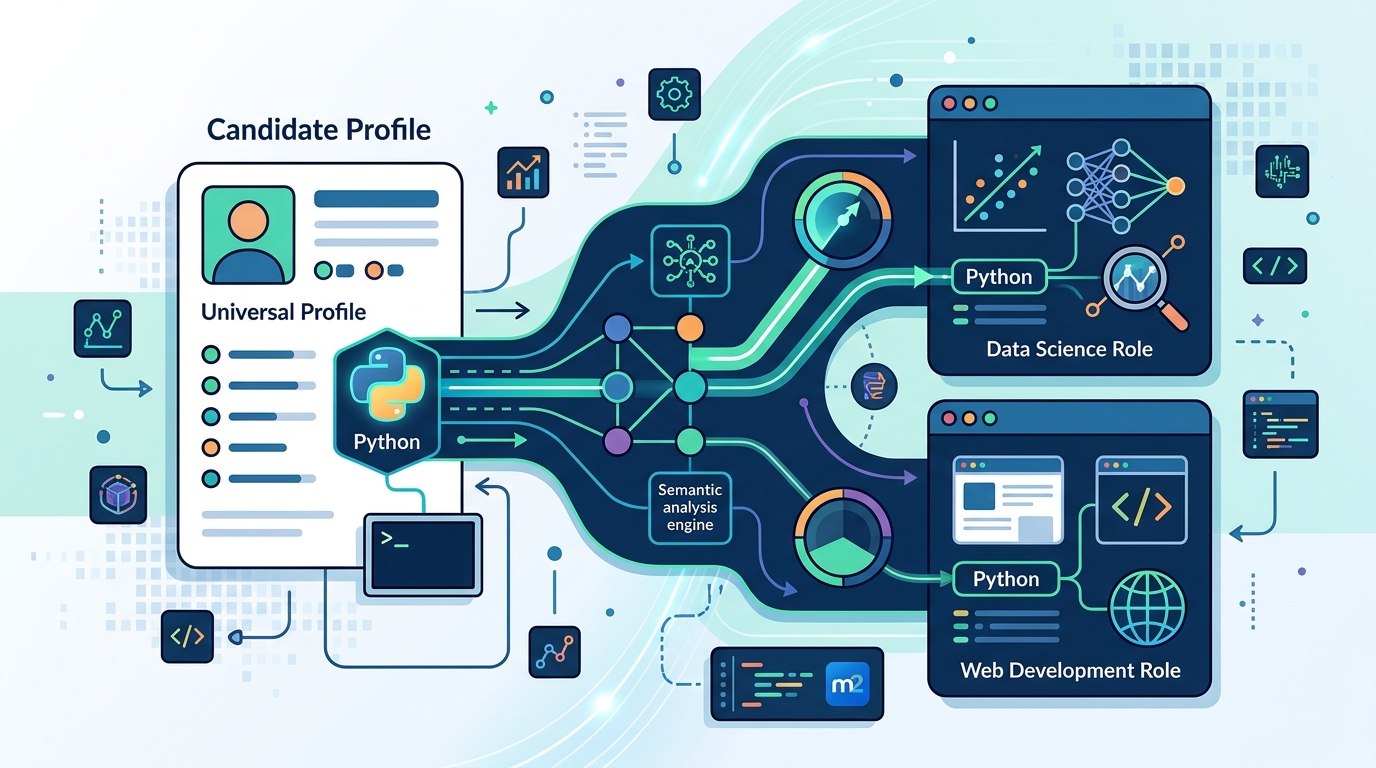
Traditional keyword matching fails because it ignores context. A candidate who lists "Python" in a data science role is different from one who lists it in a web development role. AI systems use semantic analysis to understand the relationship between skills and job functions. This technology reads the intent behind the text. It distinguishes between a skill used for production code and one used for academic research. This depth of understanding is what makes modern matching accurate. For additional details, review the Match2 One Universal Candidate.
For example, a platform might analyze a resume that mentions "managed a team of five." The AI determines if this refers to direct reports or a project team. It then maps this to the job description's requirement for "people management experience." This contextual mapping ensures that the match score reflects true capability. It prevents false positives where keywords align but skills do not. For additional details, review the .
Weighted Scoring Models
Not all job requirements carry the same importance. A senior engineering role might prioritize system architecture over specific framework knowledge. AI engines use weighted scoring models to assign different values to different criteria. Core skills might account for 60% of the score. Soft skills and cultural fit might account for 20%. Availability and location might account for the remaining 20%. This weighting is often configured by the hiring manager to reflect their specific needs. For additional details, review the Customer Experience.
The calculation aggregates these weighted factors into a single number. If a candidate meets all core requirements but lacks one preferred tool, the score might be 85%. If they lack a core requirement, the score drops significantly. This granular breakdown allows the system to prioritize candidates who meet the non-negotiable criteria. It ensures that the highest-scoring candidates are the most viable for the specific role. For additional details, review the Frequently Asked Questions.
Dynamic Profile Updates
Static resumes become outdated quickly. A candidate's skills, availability, and interest levels change over time. AI matching systems rely on dynamic profiles that update in real-time. When a candidate updates their resume or marks themselves as available, the system recalculates their match scores instantly. This ensures that employers always see current data. It eliminates the problem of contacting a candidate who is no longer looking for work. For additional details, review the About.
Consider a candidate who gains a new certification. The moment they add this to their profile, the AI re-evaluates their fit for roles that require that certification. Their match score for those specific jobs increases immediately. This real-time responsiveness is a key differentiator in modern talent management. It keeps the talent pool active and relevant for employers.
Transparency and Explainability
Black-box algorithms create distrust. Candidates need to understand why they are being matched to a role. Transparent AI systems provide explainable scores. They show the candidate which specific skills and experiences contributed to the match. For instance, the system might highlight that the candidate's "project management" experience and "agile methodology" skills drove the high score. This transparency builds trust and engagement.
Explainability also helps candidates identify gaps. If a score is lower than expected, the system can show which requirements were not met. This turns the match score into a coaching tool. Candidates can see exactly what they need to improve to increase their fit for similar roles. This feedback loop empowers candidates to take control of their career development.
Implementation in Modern Platforms
Implementing these scoring models requires a robust infrastructure. The system must process large volumes of data quickly. It needs to handle unstructured text from resumes and structured data from job postings. Modern platforms integrate these AI models directly into the career site experience. This allows candidates to see their match scores instantly when browsing jobs. It removes the friction of manual application screening.
Key Takeaways
- AI match scores use semantic analysis to understand context, not just keywords.
- Weighted scoring models allow employers to prioritize specific job requirements.
- Dynamic profiles ensure that match scores reflect real-time candidate availability and skills.
- Transparency in scoring builds trust and helps candidates identify skill gaps.
- Integration with existing hiring platforms ensures seamless data flow and instant matching.
- Universal profiles allow candidates to maintain a single source of truth for their career data.
Frequently Asked Questions
What data points are used to calculate a job match score?
How often are match scores updated?
Scores are updated in real-time whenever a candidate updates their profile or when a job description changes.
Can candidates see why they received a specific score?
Yes, transparent systems show which specific skills and experiences contributed to the score. This helps candidates understand their fit.
Does the AI consider soft skills in the match score?
It depends on the employer's configuration. Many systems allow soft skills to be weighted as part of the overall score.
How does a universal profile affect match accuracy?
A universal profile provides consistent data across platforms. This reduces errors and ensures that the AI has a complete view of the candidate's qualifications.
Can employers customize the matching criteria?
Yes, employers can adjust the weights for different criteria to reflect their specific hiring priorities.
Conclusion
AI job match scores are calculated through a combination of semantic analysis, weighted scoring, and real-time data updates. This process provides a transparent and accurate measure of candidate fit. It helps candidates make informed decisions and helps employers find the right talent quickly. By leveraging these technologies, platforms like Match2 modernize the recruiting workflow. They create a connected ecosystem where data flows seamlessly between candidates and employers. This approach ensures that the right people are matched with the right opportunities.