
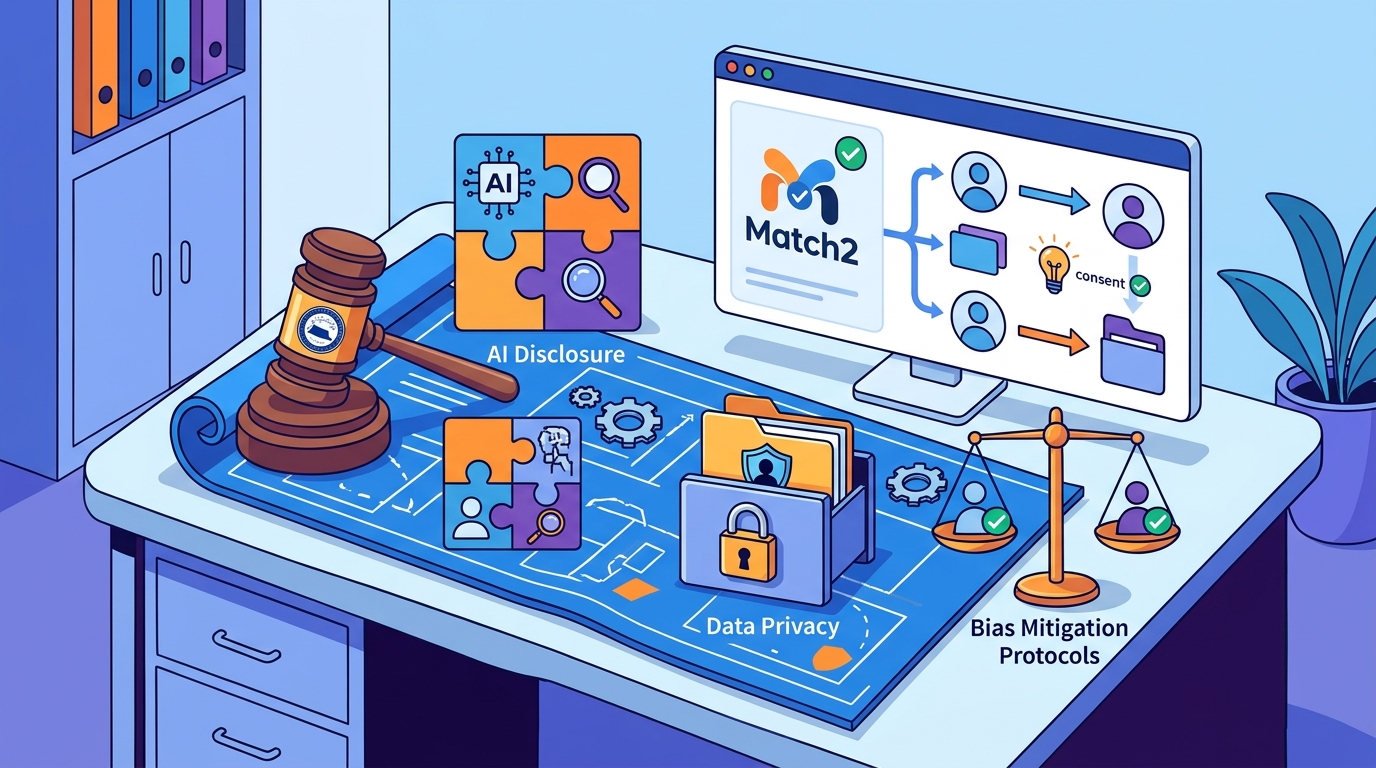
State employment laws in 2026 require hiring platforms to implement transparent AI disclosure, strict data privacy controls, and bias mitigation protocols. Match2 addresses these regulatory shifts by prioritizing candidate consent and transparent matching logic. This approach ensures compliance with emerging state mandates while maintaining a positive candidate experience. For additional details, review the Match2Jobs Workforce Solutions.
Transparency Mandates and AI Disclosure
Transparency is the cornerstone of 2026 compliance. Many states now require employers to disclose when AI is used in the hiring process. This disclosure must be clear and accessible to candidates before they apply. Platforms that hide their algorithms face significant legal risk.
Match2 operates on a model of radical transparency. Our platform informs candidates that AI is used to match their profile to job requirements. This is not a black box. Candidates see how their skills align with the role. This transparency builds trust and satisfies legal requirements for informed consent. For additional details, review the Match2Jobs Workforce Solutions.
The implication for hiring platforms is clear. You must move away from opaque scoring systems. Instead, you should adopt tools that explain their matching logic. This shift protects your brand and ensures legal safety.
Data Privacy and Candidate Consent
Data privacy laws have expanded significantly. State laws now treat candidate data with the same rigor as consumer data. This means platforms must obtain explicit consent before collecting and processing personal information. Data minimization is also a key requirement.
Match2 empowers candidates to control their data. Users decide what information to share and with whom. This consent-based model aligns perfectly with state privacy regulations. It ensures that platforms only process data that candidates have explicitly approved for use.
For hiring platforms, this means auditing your data collection practices. You must ensure that you are not hoarding data unnecessarily. A consent-first approach reduces liability and respects candidate rights.
Bias Mitigation and Fairness
Bias mitigation is a critical legal requirement in 2026. State laws mandate that AI hiring tools undergo regular audits for bias. These audits must demonstrate that the tool does not discriminate based on protected characteristics. Failure to conduct these audits can result in fines and lawsuits.
Match2 focuses on skill-based matching rather than demographic data. By focusing on verified skills and experience, we reduce the risk of bias. Our matching logic is designed to be objective and fair. This approach helps employers meet their legal obligations for unbiased hiring.
The implication is that you must choose tools that prioritize fairness. Look for platforms that provide audit reports and bias mitigation features. This ensures that your hiring process is legally defensible.
Wage and Hour Compliance
For hiring platforms, this means ensuring that your job data is accurate and up to date. Inaccurate wage information can lead to legal issues and poor candidate experiences. Accuracy is key to compliance.
Remote Work and Location-Based Laws
Remote work has complicated employment law compliance. State laws vary significantly regarding remote workers. Platforms must ensure that they comply with the laws of the state where the candidate is located. This includes tax, labor, and privacy laws.
Match2 helps employers manage remote work compliance by providing location-based insights. This allows employers to understand the legal requirements for each candidate. By providing this information, we help employers avoid legal pitfalls associated with remote hiring.
The implication is that you must be aware of the legal landscape in every state where you hire. This requires a robust compliance strategy. Partnering with a platform that understands these nuances is essential.
Key Takeaways
- Transparency is mandatory. Disclose AI use clearly to candidates.
- Consent is critical. Obtain explicit permission for data processing.
- Bias audits are required. Regularly test your tools for fairness.
- Wage transparency is expanding. Ensure accurate pay data in postings.
- Remote work compliance is complex. Understand state-specific laws.
- Match2 prioritizes consent and transparency to ensure compliance.
Frequently Asked Questions
What are the main state employment laws affecting hiring platforms in 2026?
The main laws focus on AI transparency, data privacy, bias mitigation, and wage transparency. These laws require platforms to disclose AI use, obtain consent, audit for bias, and provide accurate wage data.
How does Match2 ensure compliance with these laws?
Match2 ensures compliance by prioritizing candidate consent, transparent matching logic, and skill-based fairness. We do not use demographic data for matching, reducing bias risk.
Do I need to disclose AI use to candidates?
Yes, many states require disclosure of AI use in hiring. You should inform candidates when AI is used to evaluate their application or match them to jobs.
What is data minimization in the context of hiring?
Data minimization is the practice of collecting only the data necessary for the hiring process. This reduces privacy risks and ensures compliance with state laws.
How can I mitigate bias in my hiring platform?
You can mitigate bias by using skill-based matching, conducting regular audits, and avoiding the use of demographic data in decision-making processes.
Conclusion
State employment laws in 2026 demand a new approach to hiring technology. Transparency, consent, and fairness are no longer optional. They are legal requirements. Match2 is built to meet these demands. Our platform prioritizes candidate control and transparent matching. This ensures that you stay compliant while attracting top talent. To see how Match2 can help you navigate these legal landscapes, .