
Artificial intelligence is no longer a futuristic concept in recruitment. It is a present-day operational necessity. According to recent industry data, organizations leveraging AI in their hiring workflows report a significant reduction in time-to-fill metrics compared to traditional manual processes. This shift is driven by the need to process vast volumes of candidate data efficiently while maintaining high standards of quality and compliance. As the talent market becomes increasingly competitive, the ability to automate routine tasks allows human resources teams to focus on strategic relationship building and candidate experience. This guide explores how AI transforms recruitment, the specific tools available, and the strategic framework required for successful implementation.
What Is AI in Recruiting?
To understand the value proposition, we must first define the technology. AI in recruiting refers to the use of machine learning algorithms and natural language processing to automate and enhance various stages of the hiring lifecycle. This includes everything from initial candidate sourcing and resume screening to interview scheduling and predictive analytics for retention.
At its core, AI in recruiting is a system that analyzes patterns in historical hiring data to predict future outcomes. This allows recruiters to identify high-potential candidates who might otherwise be overlooked due to unconscious bias or manual oversight. The technology does not replace the recruiter but rather augments their capabilities by handling high-volume, repetitive tasks. For organizations looking to modernize their approach, understanding the core features of AI-driven platforms is essential for maximizing return on investment.
Key Benefits of AI-Driven Hiring
Adopting AI in your hiring process offers several distinct advantages that directly impact organizational efficiency and candidate quality.
1. Reduced Time-to-Fill
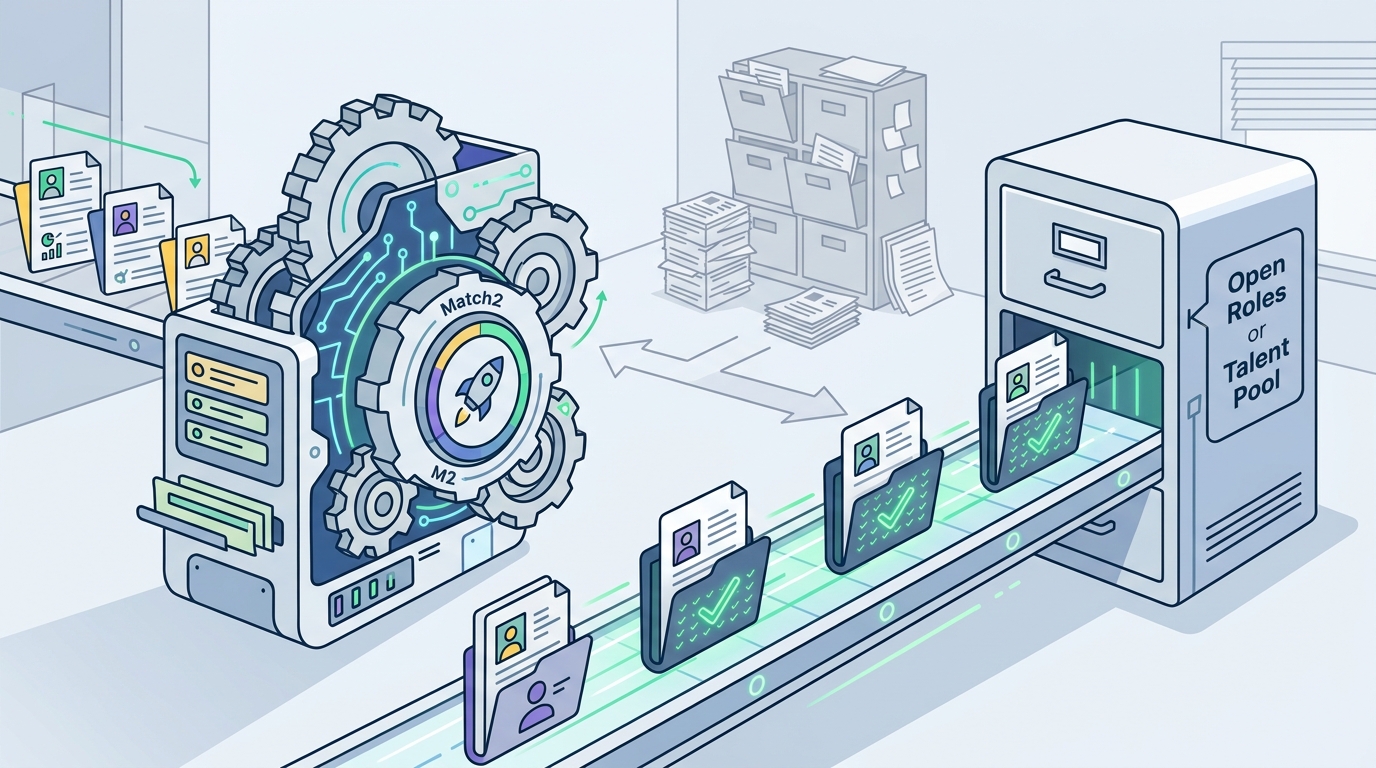
One of the most immediate benefits is the acceleration of the hiring timeline. AI tools can screen thousands of resumes in seconds, ranking candidates based on predefined criteria. This drastically reduces the time recruiters spend on manual screening. According to workforce analytics, companies using AI in recruitment can reduce time-to-hire by up to 50 percent. This speed is critical in competitive markets where top talent is often snapped up quickly.
2. Enhanced Candidate Sourcing
AI expands the talent pool by identifying passive candidates who are not actively looking for jobs but match the ideal profile. These tools scan professional networks and digital footprints to find individuals who fit specific skill sets. This proactive approach ensures that recruiters are not limited to active job seekers. For more details on sourcing strategies, visit the Match2 blog.
3. Improved Quality of Hire
By using data-driven insights, AI helps predict which candidates are likely to succeed in a role. This is achieved by analyzing past performance data of successful employees and matching it against new applicants. This predictive capability reduces the risk of bad hires, which are notoriously expensive. The cost of a bad hire can range from 30 to 40 percent of the employee's first-year earnings. AI mitigates this risk by providing a more objective assessment of candidate potential.
4. Bias Reduction
While AI can inherit biases from its training data, well-designed AI systems can actually reduce human bias. By focusing on skills, experience, and performance metrics rather than demographic information, AI promotes a more diverse and inclusive hiring process. This is particularly important for organizations committed to diversity, equity, and inclusion (DEI) goals. Learn more about inclusive hiring practices in our assessment resources.
Implementation Strategies for Match2 Users
Implementing AI requires a strategic approach to ensure seamless integration with existing workflows. Here is how organizations can effectively leverage AI through platforms like Match2.
Define Clear Criteria
Before deploying AI tools, it is crucial to define clear and objective hiring criteria. This includes specific skills, experiences, and cultural fit indicators. The AI system needs accurate data to function effectively. Vague criteria lead to poor candidate matches. Use the candidate types framework to structure your requirements.
Integrate with Existing ATS
Ensure that the AI tool integrates smoothly with your existing Applicant Tracking System (ATS). This prevents data silos and ensures that all candidate interactions are tracked centrally. A unified system provides a holistic view of the candidate journey. Check the about page for more on our integration capabilities.
Monitor and Optimize
AI systems require continuous monitoring to ensure they are performing as expected. Regularly review the candidates being ranked and screened to identify any anomalies or biases. Adjust the algorithms as needed to reflect changes in hiring goals. This iterative process ensures long-term success.
Comparison of AI Recruitment Tools
Not all AI recruitment tools are created equal. Below is a comparison of key features to help you choose the right solution for your needs.
| Feature | Match2 | Traditional ATS | Standalone AI Tools |
|---|---|---|---|
| Resume Screening | Advanced AI Ranking | Keyword Matching | Variable |
| Candidate Sourcing | Integrated Network | Limited | External Only |
| Predictive Analytics | Yes | No | Sometimes |
| Integration Ease | High | Medium | Low |
As shown in the table, Match2 offers a comprehensive suite of AI-driven features that integrate seamlessly with existing systems. This holistic approach provides a competitive advantage over fragmented solutions. For a deeper dive into our features, explore our detailed documentation.
Challenges and Ethical Considerations
While AI offers numerous benefits, it also presents challenges that must be addressed to ensure ethical and effective use.
Data Privacy
AI systems process vast amounts of personal data. It is crucial to comply with data privacy regulations such as GDPR and CCPA. Ensure that your AI provider has robust security measures in place. Transparency with candidates about data usage is also essential. Review our FAQ for privacy details.
Algorithmic Bias
AI systems can perpetuate biases if not carefully monitored. Regular audits of the algorithm's decisions are necessary to identify and correct any discriminatory patterns. This ensures fair treatment of all candidates. For more on this topic, see the blog post on ethical AI.
Human Oversight
AI should augment, not replace, human judgment. Final hiring decisions should always involve human review to account for nuances that AI might miss. This hybrid approach ensures both efficiency and empathy in the hiring process.
Key Takeaways
- AI can reduce time-to-hire by up to 50 percent through automated screening.
- Predictive analytics help identify high-potential candidates, reducing bad hire costs.
- Match2 offers integrated AI features for sourcing, screening, and assessment.
- Data privacy and bias mitigation are critical considerations for AI implementation.
- Human oversight remains essential for final hiring decisions and candidate experience.
- Clear hiring criteria are foundational for effective AI performance.
- Continuous monitoring and optimization ensure long-term AI success.
Frequently Asked Questions
How does AI improve candidate sourcing?
AI improves candidate sourcing by identifying passive candidates who match specific skill sets and criteria, expanding the talent pool beyond active job seekers.
Is AI biased in hiring?
AI can be biased if trained on biased data, but well-designed systems with regular audits can reduce human bias and promote diversity.
What is the role of human recruiters in AI-driven hiring?
Human recruiters focus on strategic relationship building, final decision-making, and candidate experience, while AI handles repetitive tasks like screening and scheduling.
How secure is candidate data in AI systems?
Reputable AI providers use robust security measures and comply with data privacy regulations like GDPR and CCPA to protect candidate information.
Can AI predict candidate success?
Yes, AI can predict candidate success by analyzing historical data of high-performing employees and matching it against new applicants.
What are the key features of Match2's AI?
Match2's AI includes advanced resume screening, integrated candidate sourcing, predictive analytics, and seamless ATS integration.
How do I get started with AI hiring?
Start by defining clear hiring criteria, choosing an integrated AI platform like Match2, and implementing a continuous monitoring process.
What is the cost of implementing AI in hiring?
Costs vary by provider and features, but the ROI from reduced time-to-hire and improved quality of hire often outweighs the initial investment.
Next Steps
Ready to transform your hiring process with AI? Contact the Match2 team today to schedule a demo and see how our connected candidate recruiting solutions can streamline your workflow. Visit our contact page to get started.