
Essential AI Verification Features for Blocking Fraudulent Job Applications
Recruitment fraud has evolved from simple resume padding to sophisticated, AI-driven identity theft and credential forgery. According to recent industry analyses, organizations lose billions annually due to fraudulent hires and the associated compliance risks. This surge in malicious activity demands a shift from manual screening to automated, intelligent verification systems. Companies must now integrate robust AI verification features to protect their hiring pipelines and maintain workforce integrity.
Understanding the Modern Fraud Landscape
The traditional resume screening process is no longer sufficient against modern threats. Fraudsters now use generative AI to create flawless but fake resumes, deepfake videos for interviews, and synthetic identities to bypass background checks. This creates a significant risk for employers who rely on accurate candidate data for decision-making.
Match2 addresses this challenge by providing connected candidate recruiting solutions that prioritize authenticity. By leveraging advanced technology, organizations can detect inconsistencies that human reviewers might miss. The goal is not just to filter out bad candidates but to ensure that every applicant is who they claim to be.
According to data from leading cybersecurity firms, the number of identity-related hiring fraud cases has increased by over 300% in the last five years. This statistic highlights the urgent need for automated verification tools. Without these safeguards, companies risk legal liabilities, reputational damage, and operational disruptions.
Core AI Verification Features
To effectively block fraudulent applications, recruitment platforms must integrate specific AI-driven capabilities. These features work together to create a multi-layered defense system against identity theft and credential forgery.
1. Biometric Identity Verification
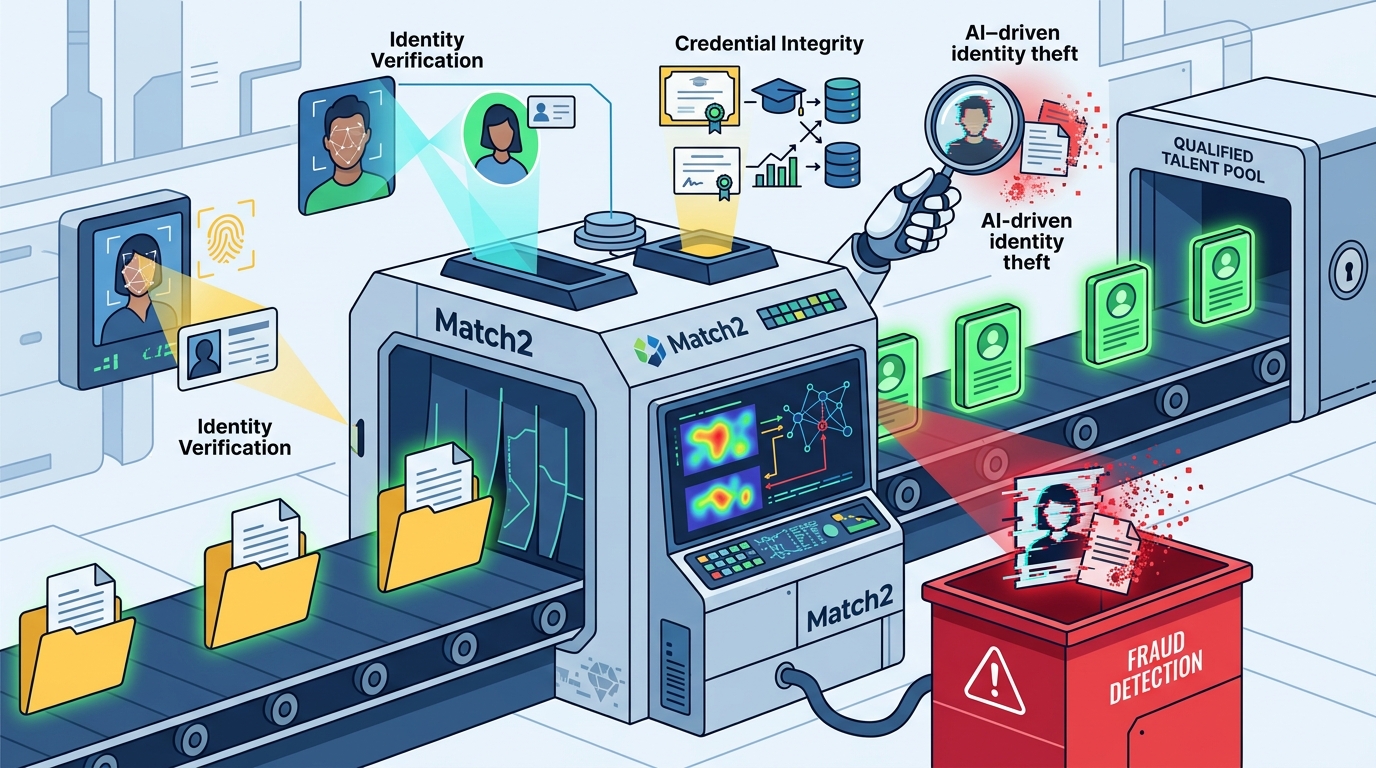
Biometric verification uses unique physical characteristics to confirm a candidate's identity. This process typically involves facial recognition, voice analysis, or fingerprint scanning. Biometric verification is the process of confirming a user's identity through unique biological traits. This method is highly accurate because it is difficult for fraudsters to replicate these traits using standard AI tools.
When a candidate submits an application, the system can prompt them to complete a quick biometric check. This ensures that the person applying is the same person who will be interviewed and potentially hired. It eliminates the risk of someone using a stolen identity to apply for multiple positions.
2. Document Authenticity Analysis
Fraudulent candidates often submit forged degrees, certifications, or employment letters. AI document analysis tools can detect subtle anomalies in these files that indicate forgery. Document authenticity analysis is the automated examination of digital files to detect signs of tampering or fabrication. These tools check for metadata inconsistencies, font mismatches, and digital signature validity.
For example, if a candidate claims to have a degree from a specific university, the AI can cross-reference the document with official databases. It can also analyze the visual structure of the document to ensure it matches the official format issued by the institution. This reduces the burden on HR teams to manually verify each credential.
3. Behavioral Biometrics and Proctoring
During virtual interviews, behavioral biometrics can monitor a candidate's interaction with the device. This includes typing patterns, mouse movements, and eye contact. Behavioral biometrics is the analysis of user interaction patterns to establish a unique digital fingerprint. If the behavior during the interview differs significantly from the application phase, it may indicate a proxy candidate.
AI proctoring tools can also detect the presence of other people in the room or the use of unauthorized devices. This ensures that the candidate is performing the assessment independently. These features are crucial for maintaining the integrity of skills-based testing and interviews.
4. Cross-Platform Data Validation
AI systems can validate candidate claims against multiple external data sources. This includes professional networks, public records, and previous employment databases. Cross-platform data validation is the automated comparison of candidate information across multiple authoritative sources. This helps to confirm the accuracy of employment history and professional qualifications.
For instance, if a candidate lists a specific role at a company, the AI can check for consistency in dates, titles, and responsibilities. It can also look for red flags such as frequent job changes or gaps in employment that are not explained. This provides a more comprehensive view of the candidate's professional history.
Implementation Strategy for HR Teams
Integrating AI verification features requires a strategic approach to ensure seamless adoption and maximum effectiveness. HR teams must balance security with candidate experience to avoid driving away top talent.
Step 1: Define Verification Thresholds
Not all roles require the same level of verification. High-security positions may need full biometric checks, while entry-level roles might only require document validation. Define clear thresholds based on risk levels. This ensures that resources are allocated efficiently.
Step 2: Choose the Right Platform
Select a recruiting platform that offers robust AI verification capabilities. Match2 provides a suite of tools designed to enhance the recruiting strategy with connected candidate solutions. Look for platforms that offer real-time verification and easy integration with existing ATS systems.
Step 3: Communicate with Candidates
Transparency is key to maintaining trust. Inform candidates about the verification process and why it is necessary. Explain how their data is protected and used. This reduces anxiety and increases the likelihood of successful verification.
Step 4: Monitor and Adjust
Regularly review the performance of your verification systems. Analyze false positive and false negative rates to identify areas for improvement. Adjust thresholds and algorithms as needed to maintain accuracy.
Compliance and Ethical Considerations
While AI verification is powerful, it must be implemented with careful attention to privacy and ethical standards. Data protection regulations such as GDPR and CCPA impose strict requirements on how candidate data is collected and stored.
Employers must ensure that verification processes are fair and unbiased. AI algorithms should be regularly audited to prevent discriminatory outcomes. Data privacy compliance is the adherence to legal standards governing the collection and use of personal information. Failure to comply can result in significant fines and legal action.
Additionally, candidates have the right to know how their data is used. Provide clear privacy policies and options for candidates to review or delete their information. This builds trust and demonstrates a commitment to ethical recruiting practices.
Key Takeaways
- Recruitment fraud has increased by over 300% in the last five years, necessitating automated verification.
- Biometric verification uses unique physical traits to confirm identity with high accuracy.
- Document authenticity analysis detects tampering in resumes and certifications.
- Behavioral biometrics monitors interaction patterns to prevent proxy testing.
- Cross-platform data validation confirms employment history against external sources.
- Match2 offers connected candidate solutions to enhance recruiting security.
- Compliance with data privacy laws is essential for ethical implementation.
Frequently Asked Questions
What is AI verification in recruiting?
AI verification in recruiting refers to the use of artificial intelligence technologies to validate a candidate's identity, credentials, and background. It automates the process of checking for fraud and ensuring data accuracy.
How does biometric verification work for job applicants?
Biometric verification works by capturing unique physical or behavioral traits, such as facial features or voice patterns, and comparing them to a known identity. This ensures that the person applying is who they claim to be.
Is AI verification compliant with privacy laws?
Yes, AI verification can be compliant with privacy laws if implemented correctly. Employers must ensure that data is collected with consent, stored securely, and used only for verification purposes. Compliance with regulations like GDPR is critical.
What are the benefits of using AI for background checks?
AI background checks are faster, more accurate, and cost-effective than manual checks. They can process large volumes of data quickly and detect patterns that humans might miss. This reduces the risk of hiring fraudulent candidates.
How can I implement AI verification in my hiring process?
You can implement AI verification by choosing a recruiting platform that offers these features, such as Match2. Define your verification thresholds, communicate the process to candidates, and regularly monitor the system's performance.
What is document authenticity analysis?
Document authenticity analysis is the automated examination of digital files to detect signs of tampering or fabrication. It checks for metadata inconsistencies, font mismatches, and digital signature validity to ensure documents are genuine.
Why is cross-platform data validation important?
Cross-platform data validation is important because it confirms the accuracy of candidate claims against multiple authoritative sources. This helps to identify discrepancies and verify employment history and qualifications.
Secure Your Hiring Process Today
Fraudulent job applications pose a significant threat to organizational integrity and security. By implementing essential AI verification features, you can protect your company from these risks and ensure a fair hiring process. Match2 provides the tools and insights needed to upgrade your recruiting strategy. Visit our Assess page to learn more about our verification capabilities. For more insights, check out our HR & Recruiting Blog. If you have questions, contact our team via our Contact Us page. Explore our Platform Features to see how we can help. Learn more about our approach in our About section. Get started with our recruiting solutions today.